Showing posts with label culture. Show all posts

Saturday, November 1, 2014

my sardine can in Seoul

I've waited way too long to tell you guys about this.

Miss H and I returned from Hong Kong on August 7. On August 10, she decided to quit her job. She gave a month's notice at work, packed up all her stuff, and flew home with our black cat Charlie. She's now living in a two-bedroom, two-bath apartment in Henderson, Nevada, and working two or three jobs to be able to afford it until I get there. 


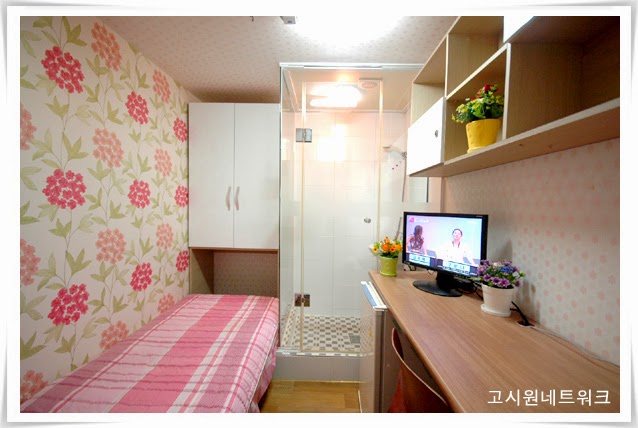
In the meantime, yours truly had to move out of that lovely three-bedroom apartment near Daecheong Station in Gangnam-gu (from which I used to take all those lovely walks by the Yangjae Stream, remember?). With the help of a website geared specifically toward foreigners, I located and moved into a tiny little oneroomtel in Gwangjin-gu, close to Sejong University, where I work.

What's a "oneroomtel"? 

This: 

www.habang.co.kr

...basically a closet with a bathroom. Oneroomtels are a nicer and slightly larger version of your basic goshiwon, which is just a room, a bed, and a desk. Mostly they're used by students who need to sequester themselves somewhere quiet and peaceful to study for exams, or by older men who've recently lost their jobs or gotten divorces. Either way, goshiwons are at best a temporary state of affairs. Technically I'm not supposed to be living in one; that's just nuts. The cabin fever will drive you insane. I'll be here four months in total, from early September to early January, at ₩400,000 (approximately $370) per month. 

It's not so bad. I jokingly call it my "sardine can," but it's actually quite livable. Having an en suite bathroom is nice. And I've made the place as cozy as possible, with soft bedding, an electric fan, a calendar on the wall, snacks and drinks in the mini-fridge, and so forth. The Internet sucks, so the room really comes in handy as a distraction-free writing zone. And I'm getting out of this monk's cell as much as possible. I take long walks by the Jungnang Stream now (which runs north of the Han River, not south like the old Yangjae did). I'm within walking distance of Itaewon now—nine kilometers—so I walk there and back sometimes. It's how I discovered a delicious burger joint in Oksu, in fact. I walk south or east across the bridges and into Gangnam-gu or Songpa-gu or Gangdong-gu, or I go west into Seongdong-gu and Dongdaemun-gu, or I go north into Jungnang-gu. 

Why so much walking, and so far? Exercise. I sold my bike. It was getting old and rattly and I figured I'd better let it go. So now my only way to exercise is to walk, and I figure the longer and farther I walk, the healthier I'll be (and the less time I'm spending in my sardine can). I've been living like this for two months, and I have two months left. This is the halfway point. I've seen more of this city in those sixty days than I did the previous three years, and uncovered many of its hidden gems. 

Postie out. 

Wednesday, October 1, 2014

a day in Singapore

I woke up at eight o'clock.

I passed a bundle of laundry to the desk clerk.

I asked for a towel and got one.

I showered and shaved. 

I marched down Kitchener and Serangoon Roads to the Mustafa Centre, where I exchanged 220 Thai baht, 10 U.S. dollars, and 361 Malaysian ringgit for 161 Singapore dollars. 

While I was there, I bought a padlock for my defunct locker back at Tresor Tavern.

All this I accomplished before eleven o'clock. 

I went back to the hostel and sat in the lobby, sweating, updating my journals and letting my parents know I was still alive. I also spent some time writing down the addresses of everything I wanted to see and eat in this town today (Thursday, July 31). 

I went to Chinatown to check out the Heritage Centre and was told it cost $10 SGD to get in. 

I said "Screw that with a pitchfork." 


I went to the foodie street and had some laksa, a spicy noodle soup in greasy orange broth which is central to Peranakan (Chinese-Malay) cuisine and Malaysia's national dish. It consists of rice vermicelli (though this touristy dump used spaghetti) in coconut milk and curry broth. My bowl included hard-boiled eggs, cockles, bean curd puffs, and bean sprouts, and cost $4.50 SGD.

I did not take a food selfie. Too hungry. 

On an impulse I walked across South Bridge Street and caught the open-top sightseeing bus for $25 SGD. We swung out west, down shady, tree-lined Havelock and Zion Roads, curving up to the Botanical Gardens (the one thing in Singapore that I didn't see and wish I had). Then we went dead east on Orchard Road. As clean, bright, and shiny as this city was, dazzlingly clear as it dried from the previous night's rain, there wasn't much to it besides shopping, eating, and authoritarianism. "HAPPY 49th BIRTHDAY, SINGAPORE!" squawked loud orange banners on every lamppost, but on the subway trains were stern admonishments to the citizens to be polite when boarding or exiting, to move to the back or offer your seat to an invalid. Public service announcements printed starkly in black, white, and red urged citizens to perform the vital five-step method to eradicate dengue fever (promptly emptying every container on your property of standing water). 

What was most jarring was seeing so many Occidental franchises. Malaysia and even Cambodia had KFC and Starbucks, and Seoul has Burger King and McDonalds and Coffee Bean & Tea Leaf, but Singapore was just mad—Long John Silver's, California Pizza Kitchen, Coldstone Creamery, Quizno's Subs, and everything else British or American. I was disappointed. Foreign excursions are supposed to be...well, foreign. And I hated to think that the average Singaporean's idea of western culture was a soggy McDonald's sandwich, some limp fries and a syrupy soft drink. 


The Singapore River. Really takes your breath away, doesn't it? 

After a short foray north and east to Sungei Road, the sightseeing bus dumped us out at the Singapore Flyer. Think the London Eye, but bigger—"the world's tallest observation wheel," proclaimed the posters and brochures. That was a blatant falsehood, as the High Roller in Las Vegas is actually taller, but I'm not the quibbling type—not when sweat's soaking my collar and the red bandanna I'd tied around my right hand and wrist for mopping and sopping purposes. 

Pro tip, kids: this is more fashionable than wrapping it around your forehead and more sanitary than sticking it back in your pocket after every wipe. Just be prepared for lots of concerned fellow travelers to ask you how you hurt your wrist. 

I caught the next bus to Clarke Quay and switched to the metro. I went back to the hostel, rested, rehydrated, and wrote some postcards (the fifth of seven batches). At 6:45, a time I judged with a pilot's careful precision, I caught a taxicab back to the Flyer to see the sunset from on high. 

The Flyer isn't very popular with the locals. According to TIME, they gripe that it's too far away from everything and costs too much. I didn't sympathize with the former sentiment but certainly the latter: tickets were $33 SGD. Concordantly, there wasn't much of a crowd. I rolled up at seven o'clock, bought a ticket, hustled through all the supplementary bullshit they put up to make waiting in line more interesting—planetariums and historical placards and whatnot—and got some fantastic views of the downtown area and Marina Bay. 


Then, of course, I went to O'Leary's Sports Bar & Grill—foreigner-owned and foreigner-run, looking like it had sprung from any broad boulevard in the Inland Empire—for a nightcap. What else but a Singapore sling? 


It was weak and sickly-sweet and cost $17 SGD, but what the hell. I can say I've had a Singapore sling in Singapore. 

I'd meant to sample the best that Little India could offer me in the way of eats, but my internal compass was taking a much-deserved rest. I couldn't find my intended destination, Bali Nasi Lemak in Geylang. So I went back to the neighborhood of my hostel and sat down in the same little halal Sri Lankan/Thai cafeteria where that snaggle-toothed Samaritan Singaporean had bought me a bottle of water the previous evening. I had some iced lychee juice and a plate of nasi goreng thai for just $4.50 SGD. For afters I had some sort of fried fish dumpling, also delectable. I couldn't discern the waiter's thick Tamil accent when I asked what it was. Sounded like "kampop." 

I got an A&W root beer for dessert (you don't see those every day in Asia) and returned to the hostel to update my journals. My time in Singapore was at an end. The next morning I would mail postcards, check out of the Tresor Tavern at noon, and catch the metro for Changi Airport. 

If you'd like to find out why I hate Singapore, come back tomorrow. 

Monday, September 15, 2014

snake wine in Cambodia

First, you should see what it is.

Second, you should see what it looks like.

Third, you should know that I still wanted to try it, even though I understood both of these things in advance. 

I happened to see a souvenir market set up on the broad, palm-shaded grounds of Angkor Wat, so I stopped over to have a look. I had intended to give snake wine a taste in either southern China or Vietnam, where its consumption, I assumed, was more widespread and commonplace. No opportunity presented itself. You may imagine my delight when I saw bottles of snake wine being sold at this Cambodian market, then. I picked a small bottle, talked the saleswoman down from $8 to $5 (though I probably could have gotten it for $4) and took it back to the King Boutique Hotel with me to sample.


Here's the video.


Now, I know what's going through your head. Two thoughts, roughly along the lines of "Eww gross, I wouldn't touch that stuff with a ten-foot pole," and "Why would anyone in their right mind want to drink that?"

Well, there's two things you should know. Number one, I am not in my right mind. I've been eating strange things on this blog for five years now. Number two, snake wine is a thing in Southeast Asia, because...

...well, like so many other weird foods and exotic animal products in the Orient, snake wine is believed to be a cure-all. The Chinese, Vietnamese, Taiwanese, and other-ese loudly insist that the stuff will fix everything from hair loss to farsightedness. Oh, and it increases male sexual performance as well. Holy schla-moly, if I had a nickel for every nostrum that the Asians claim improves male stamina, I wouldn't be sitting here in a hipster cafĂ© off Gwangnaru Road writing about it. 

Anyway, I just thought you should see me drinking a bottle of bathtub tequila with a dead cobra in it. Don't you feel special?

Friday, September 12, 2014

to Phnom Penh by bus

Travel Truth #3: Happy accidents do happen. Especially at dinnertime. 

My Vietnam-Cambodia hop went off without a hitch. I awoke, dressed, went downstairs, and paid $20 for my laundry, a bottle of water and a ticket to Cambodia. Now that's my kind of trip, right there. The receptionist arranged for a shuttle ride to get me to the bus terminal and before I knew it I was in a tiny, rollicking minivan with half a dozen other would-be passengers, including a sweet old Thai gentleman whose name I shall never be able to pronounce, let alone spell. We boarded our bus at the station, handed over $25 apiece and our passports to be stamped with Cambodian visas, and took off for the border. 

We were on Cambodian soil by 11:20. We made three stops at the border: one to get our entry forms, one to get our visas, and the third for lunch—a spacious open-ended warehouse of a building with a corrugated tin roof and orange tile floors, so cool that a couple of lazy dogs were sprawled down and napping upon it, flies buzzing about their noses. I had chicken and green beans over rice, which I was somehow able to pay for with Vietnamese money (only $2 American). I sat with the nice Thai gentleman and his bent, wrinkled, sleepy friend, who didn't speak a word of English and was wearing a Saigon souvenir baseball cap with the price tag still on it. 

While we chatted, there came a noise like an oncoming freight train. A mild hiss became a rattle, and the rattle an earth-shaking roar. The monsoon rains were pounding down on the tin roof, each drop as big as a .50-caliber bullet, and you could hardly hear yourself think. The Thai gent and I finished our conversation at a yell and then boarded the bus to continue our journey. 


My impressions of Cambodia weren't that different from Vietnam—the two countries looked pretty similar. But the countryside here was dustier, flatter, trashier, poorer, and the people were decidedly more Indian-looking. I saw hump-backed, cud-chewing Brahman cattle, houses on stilts, wells with tin-roofed cupolas, ponds covered with lily pads and filled with garbage, and locals napping in hammocks—hammocks strung between stanchions, between stilts, between fence posts and walls, even between trees at the side of the road. Hammocks everywhere. 

About a half hour before we made Phnom Penh, the bus nosed its ponderous way onto a car ferry and we crossed the broad, rambunctious, muddy Mekong. 


We reached the city at about 3:30 in the afternoon. The outskirts of the town were dirty and dingy, with more of the hollow, crumbling buildings and skewed thoroughfares as Hanoi had possessed—but the Cambodian roads were mostly unpaved and the rotting buildings even dustier and more decrepit-looking. Even the highway from Saigon had been gravel for miles at a stretch. 

I jumped off the bus and nabbed the first tuk-tuk driver I could find. I forked over $5 for a ride across the north-central part of town to my hotel. Five bucks was a bit steep—I overheard other foreigners getting rides for $3—but I acquiesced, as it was the same price I'd have paid for a cab in HCMC. 

My room at the Amber House near Wat Langka wasn't ready for me when I arrived, so I was bowed into a gigantic room with two double beds across the hall. 

The funniest thing was that they had Korean comedy/variety shows on TV. With English subtitles. And as one of my coworkers from Sejong pointed out, they still weren't funny. 

I showered to get the sweat and travel grime off me, rested up for a couple of hours, and then walked to the Independence Monument and the king's memorial and snapped some shots of each. 


I had dinner at the Herb Cafe, a tourist trap of a restaurant and bar just a couple of doors down from my hotel, right across the T-intersection from Wat Langka. I hated myself for even setting foot in it. There was nobody else there but for a young, bespectacled, alarmingly skinny French hipster (perusing a tiny notebook and sipping a cocktail); a tubby, neck-bearded tourist in a black T-shirt and cargo shorts; and an elderly business traveler with a pressed blue cotton shirt and black slacks. I glanced over the menu and picked the first dish that looked good—Khmer amok—plus a whiskey sour. A full meal and an aperitif all for the low-low price of seven U.S. dollars. Zounds. I began to take a (brief) shine to Cambodia. 

I found out later that, quite by accident, I had ordered the country's national dish. Amok is a curry steam-cooked in banana leaves, with thick coconut cream and galangal being integral ingredients. Khmer amok with fish is one of Cambodia's core culinary traditions, though amok can be made with everything from chicken eggs to bamboo shoots to algae. All I can tell you is that the Khmer amok I had at the Herb Cafe near Wat Langka was spellbinding in its spicy savoriness, though (true to my code), I did not take any pictures of it. You'll just have to imagine it. Or better yet, make it yourself and try it. 

Because I had nothing to do when I'd finished my meal (but not my second whiskey sour), I struck up a conversation with the French hipster. As I'd suspected, the tiny notebook in his hands was a handmade Khmer primer. The fellow was trying to teach himself the alphabet while he sat and waited for his Buddhist friends to stop meditating in the nearby Wat Langka. His name was Erwin and he'd been working in financial administration at a local French school for the past eight months. We chatted for a few minutes until I drove him away with my questions, and he packed up and went in search of his friends. I stepped across the road into Samaky, another trendy open-air saloon with liquor bottles arranged on illuminated glass shelves along the back wall. I had a few glasses of Angkor Draft (75 cents each) and stared at the laughing clump of Cambodian ladies in the corner booth and the brooding old white dude with the natty, gnarled dreadlocks hanging down his sunburned, tank-topped back. Then I felt lonely and bored and went back to my deliciously cool room to plan tomorrow's escapades. 

Next up: the first and only full day in Phnom Penh. Prawn shooters are involved. 
Friday, September 5, 2014

Ho Chi Minh City, day one

Travel Truth #2: It pays to have friends. 

The light in which you first see a city is important. No unfamiliar metropolis looks attractive under grey, cloudy skies. Maybe some of the towns in Western Europe could pull it off, but definitely not Asia. 

I first saw Ho Chi Minh City (which from hereon I shall interchangeably refer to as either "HCMC" or "Saigon") under the pale pink light of dawn, and it was already bustling. Scooters—even more numerous than they'd been in Hanoi—warred for room on the roads with trucks and cars and taxicabs. Shopkeepers, fruit sellers, noodle-mongers, and other vendors were just opening their doors. The city was stretching and yawning wakefully under the warm, steamy, slanting light of the morning sun, which leaped above the horizon with equatorial swiftness. I observed all this as I rode in a cab from the Saigon Railway Station in District 3 to Cong Quynh Street in District 1 (which, I believe, was named after a popular scholar who lived during the Le-Trinh dynasty). 

It was barely six-thirty. Check-in time wasn't for another nine hours. But my road had been paved ahead of me. A Geordie friend whom I knew from my Geoje days, Adam, knew the morning receptionist at Green Suites. He'd greased a few wheels for me, and she admitted me to the hotel for no extra charge. Pays to have friends, see?

I had to wait a couple of hours for a room to be cleaned and prepared for me, but hey—no extra charge! 

Green Suites was infinitely better than the Asia Star in Hanoi—bigger, brighter, cleaner rooms, an enormous bathroom, a double bed whose mattress eschewed the usual Asian adamance, and more tasteful interior dĂ©cor. Gratefully I flung my baggage down and took a long shower. I considered a nap, but I was too excited. I hadn't seen Adam, Jeff, or Jenn in something like six months, and now here we were in an entirely new city in an entirely new country and about to go exploring. Hell yeah. Just you try to sit still, mister. 

Adam showed up to get me at half-past noon, and we walked through a crooked series of shade- and sun-drenched alleys to Jeff and Jenn's hotel. They'd had a hell of a time getting to Vietnam from Indonesia; their Tiger Air flight had delivered them safely but their baggage was still stuck in Singapore. To mend their stressed souls we wended our way through the twisting alleys to a nearby cafĂ© and had us some Vietnamese coffee. 


Now perhaps you haven't heard about Vietnamese iced coffee, or cĂ  phĂŞ đá in the local lingo. To quote Wikipedia, it's "coarse-ground Vietnamese-grown dark roast coffee individually brewed with a small metal French drip filter into a cup containing about a quarter to a half as much sweetened condensed milk, stirred and poured over ice." 


And that's about all you need to know, really. Aside from the fact that it's freaking delicious.

And you know what else is freaking delicious? Bacon sandwiches. 


This place was called The Hungry Pig, started by a wet-behind-the-ears English university grad who obeyed the call to "Go east, young man, go east" and, like so many of his British peers, became an entrepreneur in the Orient. This little grub shop at 144 Cong Quynh was the flagship store for what is hoped will be a country- (and perhaps continent-) spanning enterprise someday. If they keep making sandwiches that good, they'll do it just fine. You could order any fixed item on the menu or even customize ingredients to create your own Frankenstein of a sandwich. I had maple bacon and chorizo on whole grain bread with lettuce, tomato, green pepper, and red onion, plus cheddar cheese and HP ("brown") Sauce. And a little Saigon beer, of course. Fantastic.

But who can be satisfied with only one breakfast? This was HCMC and we were all on vacation. We walked down Cong Quynh, crossed Nguyen Cu Trinh, and had some cơm tấm SĂ i Gòn—Saigon-style broken rice, a signature dish. I got shredded pork on top of my rice and some kind of soft tofu ball with meat inside. We had 333 Beer and some excellent conversation with Stacey, Adam's girlfriend. 

By and by Stacey had to leave to do lesson plans and Adam had to go to work, so that left Jeff, Jenn, and me free to do some exploring. We wandered through District 1's notable areas, including Twenty-Three September Park and Báşżn ThĂ nh Market. 


Báşżn ThĂ nh Market, one of Saigon's oldest buildings, is that building with the clock in the left background. 

There were some pretty cool T-shirts that I wanted to buy, including one with a silhouette of a B-52 and that famous quote by General Curtis LeMay—"They've got to draw in their horns and stop their aggression, or we're going to bomb them back into the Stone Age"—but as usual, nothing fit me properly. Even the XXL shirts fit me like a tailored vest, with my ample stomach sticking out by a mile. So I had to quit on the business. Jeff and I wandered through the vast shopping arcade with its lofty French colonial ceiling, humid air, overworked oscillating fans, its overflowing shopping stalls stuck way too close together, and the stumpy saleswomen who kept plucking at our elbows and sleeves as we walked by. To escape these personal intrusions Jeff and I went across the road and waited for Stacey at the Coffee Bean & Tea Leaf (yes, they have those in Vietnam) to sample what Westernized commercialism has done to indigenous culture. Then we went back to our hotels for a rest.

At 5:45 we met Stacey at a place called L'Usine on Dong Khoi. It was a French-style wine and cheese sort of place, with faux-stucco walls, iron rails, potted plants, and strange realist paintings of geared devices on the walls. ("L'Usine" apparently means "Factory" in French.) We drank wine (house red and house white) and ate baguettes, cheese, figs, quince jam, marinated olives, frites, and calamari. The prices were exorbitant—for Southeast Asia. For foreigners like us it was dirt cheap. Leave it to the Brits to sniff out French wine-and-cheese joints while they're on holiday. I added L'Usine to my mental list of "places to take Miss H later" and enjoyed myself to the fullest. 

Then it was time for another break. Walking around in the hot streets and still, humid air of Southeast Asian megacities really takes it outta ya. 

We met Adam (finally off work) at 10 p.m. near my hotel. Green Suites occupies an alleyway just off the main thoroughfare of Cong Quynh, and said alleyway happens to be full of streetside eateries. One of these, Oc Trang, seats its customers on little blue plastic lawn chairs and stubby metal tables beside a cracked, crumbling, white-plastered cinderblock wall. Then it gives 'em as much phở and Bia Saigon (83 cents a bottle) as they can eat. The four of us sat around, staring out at the brightly-lit street behind us, tucking in our elbows and knees whenever a scooter roared down the alley, enduring the stares of the old women and young boys skulking in corners, watching geckos crawl across the cinderblock wall to eat gnats attracted by the floodlights, while the patrons of Oc Trang ate gaily-colored snails, prawns, and frog legs. I think that's what I'll remember most about my time in southern Vietnam, besides the cheap beer, dirty streets, and hordes of honking scooters—those geckos. They were everywhere in Vietnam and Cambodia and Thailand, sitting under the eaves near light sources and gobbling bugs by the bushel. 

Stop by next time if you want to hear about the Cu Chi tunnels. 

Wednesday, May 7, 2014

Fox Broadcasting can go pound sand

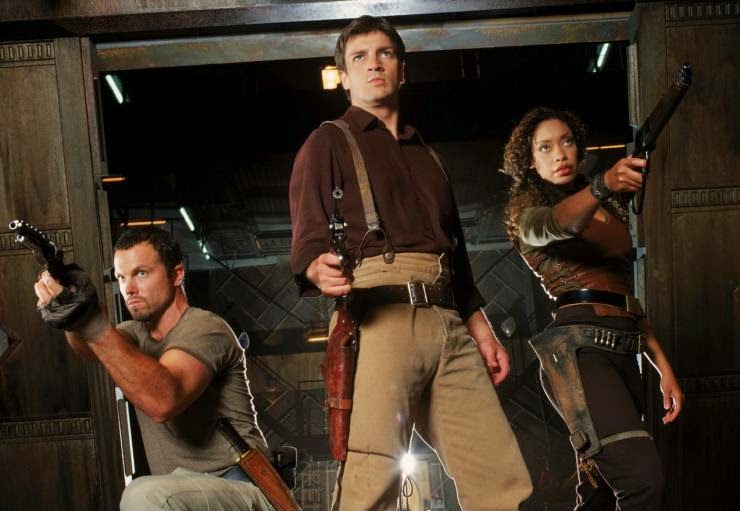
It's Blade Runner-slash-every
buddy-cop drama ever!
What's not to like? 
This is not a political rant. I don't give a split fig about Rupert Murdoch or Bill O'Reilly or what all the puffed-up bubble-headed self-important liberal college professors and community organizers refer to as "Faux News."

No, my beef is with the television executives who sit around in board meetings and decide to cancel my favorite TV shows.

It's been recently announced that the science fiction police procedural Almost Human, which aired last fall, won't be picked up for a second season.

This is the same depressing news that I got in 2012 when I heard that Terra Nova had been canceled, and the same monstrous injustice I and the other Firefly fans who came late to the game execrated when we learned that this fantastic show consisted of just 14 episodes.

Thank goodness Marvel's Agents of S.H.I.E.L.D. is on ABC, and is therefore safe from Fox's meddling, or I might have a complete psychotic breakdown.

Seriously, what gives? This is becoming such a trend that "Screwed by the Network" and "The Firefly Effect" have become official tropes. To quote from that life-stealing wiki, "Incidentally, many of these [canceled] shows (including Trope Namer Firefly) were on Fox — basically because Fox was likely to give the sort of show that gets this effect an initial run, but tended to be too Nielsen-sensitive to be patient."

Let me repeat that for you:

Too Nielsen-sensitive to be patient.

That's gotta be it. The ladder-climbing, insecure little weasels (I'd say "network executives," but that would be redundant) over at the Fox Broadcasting Company are so obsessed with making themselves look competent and keeping their stock high 
— in more ways than one — that they'll cancel a brilliant show if the Nielsen ratings are anything less than stellar.

Now, I know what you might be thinking, particularly if you're like everybody else on the face of the freaking Earth and think Almost Human and Terra Nova were terrible shows. (If you do, then what are you doing here? You should be pounding sand, too.)

You're thinking, "Where's the injustice in that? Almost Human didn't have good ratings, so it was canceled. QED."

Ratings aren't that simple, buster. Evidence suggests that Almost Human's ratings were out of its control for half its run. Firefly's doom was spelled out when Fox aired its episodes out of order and inexplicably stuck it in the "Friday night death slot." Terra Nova had 10.8 million viewers and a 3.6 rating, but the execs were worried about the price tag, and they also (wrongly) believed that a mid-season addition called Touch would be the next big hit.

It's Lost with dinosaurs! What's not to like??

I'm not a critic. I'm not going to launch into a big long spiel about why these shows are lost treasures. I'm not going to tell you how Terra Nova was "unlike anything else on TV," and that it "found its creative legs late in the season" (the article I linked to previously does that quite eloquently). I won't mention how Almost Human was just what the doctor ordered, a by-the-book police procedural with a lighthearted, humorous undercurrent, with the added zest of its dystopian-but-somehow-still-gorgeous futuristic backdrop. I have no need to declare Joss Whedon's script-writing talents godlike, and that the cinematography, dialogue, acting and story of Firefly are second to none. That's been said before by irate fans and gushing magazine columnists the world over. 

It's cowboys/Civil War veterans IN SPACE! What's not to like???

Almost Human and Terra Nova have their shortcomings, I know. The special effects and the acting aren't perfect. Pacing, characterization and story are sometimes lackluster. Everyone I know at my workplace and on Facebook loves to point out how shoddy, unengaging, static, formulaic, boring, unbelievable or artificial they are, with flat characters, unsatisfying stories and flawed concepts. But as the Guardian's pithy Glaswegian Graeme Virtue points out, the first seasons of these shows are like "the early, rough-and-ready EPs of your favourite band." Yeah, sure, the lyrics are canned and superficial, the garage-band sound is fuzzy and inexpertly mixed, the guitarist's fingers are still bleeding and the drummer hasn't found his rhythm yet, but isn't that the fun of it? Getting in on the ground floor? Liking a band because of that raw, pristine concept, the fundamental sound down deep beneath those shaky riffs and uneasy vocals? Following them while they mature into the next KISS or Zeppelin or Floyd? Watching them find their cadence, their vibe, their niche, and fill it out like a piece of loose clothing they're growing into?

That's been one of the joys of watching Marvel's Agents of S.H.I.E.L.D. Yeah, sure: it was soulless early on. A lot of people tried watching it and quit in disgust. But if they'd had the patience (unlike your average Fox network executive) to stick with it, they'd have discovered a true wonder: a flower blooming, a vine twirling its way around a beanpole, a seaweed-strewn ship emerging from its watery grave where once only the rotting, sun-bleached mastheads were visible. Watching M.A.O.S. get into its stride, establish its characters and its world and then cut loose like a slipshod stallion kicking his way out of a barn has been...well, a real kick. It's probably true that you have to be a fan of the Marvel Universe (or at least Agent Phillip Coulson, or at the very least Clark Gregg) to like the show. And you have to sit through those awkward first few episodes wherein the groundwork is laid. But then the show gets its hooks into you. Firefly and Almost Human did it during their pilot episodes, and Terra Nova managed it in the season finale.

It's just a travesty that these three shows will never have the chance to revel in the worlds they worked so hard and long to build, thanks to the pusillanimous, apple-polishing, money-grubbing swine at Fox.

That, ladies and gentlemen, is called injustice. And it's also the reason that television sucks so hard in this day and age.

Rant over.

Thursday, August 22, 2013

Arashiyama and Togetsukyo Bridge

Day Two of Kyoto:

No links this time, I promise. I'll explain stuff properly, and we'll all be on the same page. Literally. Same webpage, that is. Yeah.

Here's the thing: Kyoto is a lot smaller than Tokyo. The great metropolitan area of Japan's capital has 35 million people, making it the largest city in the world. Kyoto has a mere 1.5 million. That's still a respectable number, mind. It makes Kyoto about as big, population-wise, as Philadelphia or Vienna.

But it's an old city. Ancient. It was the capital of Japan—just the capital, mind—for a thousand years. Whereas Tokyo was built on the swampy delta of the Sumida River, Kyoto is nestled into a valley east of the mountainous Tamba highlands, right smack dab in the middle of Honshu. Green hills surround it. It seems somehow cut off from the rest of the island. It's got its own vibe. Somehow it felt even more laid-back than Busan. Again, I got the sense that the Japanese were a lot more secure, more relaxed, more genuine in their habits and mannerisms. Compared to Japan, everybody in Korea seems to have an ax to grind and a chip on their shoulder. The people in Kyoto just are. Things happen at their own pace here, and if they don't, nobody gives a flip. The city seems simultaneously proud of its status as the former capital and glad to be well shut of the business.

Nowhere is this more apparent than Arashiyama, a neighborhood on the western outskirts of Kyoto. The district is named for the mountain that broods over it from across the river. Upon the slopes of this mountain, and at its feet, were some uniquely Kyoto-ish things that I've wanted to do for ages.

But we'll get to that later. Getting to Arashiyama turned out to be almost as fun and whimsical as the place itself.

I had three options. Well, four, if you count taxicabs. But I avoided taking cabs as much as I could in Japan, since it was seven hundred yen (about $7) to drop a flag in Tokyo, and about $6.40 everywhere else I went. So I decided that it would be trains. There were three lines to choose from:

From japan-guide.com

The JR Sagano line would have necessitated going down to Kyoto Station. The Keifuku Arashiyama Line didn't stop anywhere near Shijo Station (the one nearest my hotel in the center of town). However, by taking the Hankyu Katsura Line west from Shijo Station and then switching to the Hankyu Arashiyama Line, I could get myself to that little stop at the bottom of the map above, south of the Katsura River.

(AUTHOR'S NOTE: You might notice that the river in the map above has two names. I was mighty confused about that for a while. Wikipedia labels the river the
ĹŚi, while this map says it's the Katsura River below the Togetsukyo Bridge and the Hozu River above it. As near as I can figure out, the Hozu River is the one flowing along the valley between the mountains, while the ĹŚi trickles out of those mountains to join the Hozu and flow beneath Togetsukyo. After that, the two rivers combined become the Katsura. Sort of like the Power Rangers, if there were only two Rangers and they were both wet and green and full of duck poop. All clear now?)

I got on the Hankyu Katsura Line at Shijo Station a hop, skip and a jump from the Karasuma Kyoto Hotel. The train was spacious and clean and very comfortable, and the morning bright and promising.

Kyoto's Hankyu subway service has got its act together.


I rode a few stops to Katsura Station and then switched to this charming little tram going toward Arashiyama.


Then all I had to do was sit back and watch western Kyoto, with its tile-roofed houses and tiny backyards, roll by my window:


I didn't even realize that there was a torii (sacred Shinto gate) in this picture until I looked at it later in playback mode on the my camera's pop-out screen. Talk about serendipity!

Don't that beat all? I was starting to like Kyoto. Quaint's the word, but without the creeping weirdness that the term implies. Just sort of old-fashioned and slow and enchanting, you know?

So, the Hankyu Arashiyama Line terminated at (you guessed it) Arashiyama Station, just south of the
Katsura River, and all of us schmucks who were going to Arashiyama and its environs disembarked.


I love trains. And somehow they look even cooler with Japanese or Chinese characters on them.

The view after exiting the station.

The view looking back at the station.

After a couple of minutes walking along narrow one-lane roads...


...I found myself on the shores of the Katsura River!


I immediately set about taking a panoramic shot, of which the previous three photos are the first 75%. Then I looked to my left and...lo and behold! It was the Togetsukyo ("Moon-Crossing") Bridge!


Arashiyama proper was just across the river.


Arashiyama, by the way, means "Storm Mountain." The Japanese have such awesome names for things. Yes, I mean "awesome" literally, Louis C.K.

That's the same bridge that I've seen so many anime characters walk/run across. Creepy.

This gentleman was net-fishing. Didn't even have a reel on his pole. He just hauled back and skillfully sent the fish winging right into the net in his left hand.


So now that I'm taking pictures of the river west of the bridge, it's the Hozu, not the Katsura. Don't you forget it.


Just lovely, isn't it? The water, the reeds, the town, the hills, and the clouds and mist in the background. Dang, I'm good. (Either that or my Canon T3i does all the work for me.) Looking back, I think it was Arashiyama, and particularly this scene, that made me really, really start to like Japan.

Undaunted by the blasting heat, the cloying damp, or the thundering entomological chorus, I walked down along the riverbank, snapping picture after picture, trying to get the bridge from all angles, feeling like some East Asian version of Clint Eastwood in The Bridges of Madison County.

And then, abruptly, I was on the bridge itself. To my left was a tributary of the river, and a little dock with small pleasure boats moored alongside...


...plus souvenir shops and cafes and tea houses, and a rickshaw stop.


No, seriously! Rickshaws, dude! Ferrying people across the Moon-Crossing Bridge and into the low-slung bosom of Arashiyama beyond! No taxicabs here, this is Kyoto!

But I wasn't going across the bridge just yet. My destination was left, right and then left: straight up Storm Mountain.

Tomorrow: IWATAYAMA MONKEY PARK. I feed a macaque. No joke. There's video.

Stay tuned...