Showing posts with label opinion. Show all posts

Wednesday, September 9, 2015

back from the UK

Here's the short version, in case you're pressed for time and don't want to read the rest of this post:

     1. Miss H and I went on our trip to the British Isles and Ireland. It was Fun, with a capital "F." 

     2. A couple of days ago I queried Ethan Ellenberg with a 50-page excerpt of New Model Earth, which is the new title I've chosen for Revival, my sci-fi magnum opus.

     3. Miss H and I are moving. We're staying in Henderson, but we're switching apartments.

I told myself I'd write a post for each leg of the trip Miss H and I took to Europe, with oodles of delicious pictures for you to drool over. This is a travel blog, after all. But to be honest, I can't be bothered. There's too much going on right now. We're moving, as I mentioned. And I'm still trying to do three things every day: write, read, and exercise. So far I've been failing miserably, but not for lack of trying. Well, okay, maybe for lack of trying. But not for lack of wanting. So I'll just give you the picks of the litter: 

Black Linn waterfall, near Ossian's Seat in the Scottish Highlands.

I shouldn't have to tell you what this is.

The obligatory Big Ben selfie.

Tower Bridge ain't falling down...

The Titanic's original slipway in Belfast, Northern Ireland. 

Carrick-a-Rede rope bridge, County Antrim, Northern Ireland.

Trinity College Library, Dublin. 

The view from Dundrum Castle, County Down, Northern Ireland. 

The Giant's Causeway, County Antrim, Northern Ireland.

All done drooling? Great. The trip was luscious. Heather and I had a long layover in Miami on July 3, and spent a sultry afternoon in South Beach lying on golden sand and swimming in bathwater-warm seas and stuffing our faces with Cuban food and ducking self-professed heroin addicts on Collins Avenue. The bachelor party ("stag do") in Edinburgh was a blast; the boys and I pub-crawled across town, buying cheese from a bona fide cheesemonger and whisky from a bona fide whisky monger and mowing down while we roamed the streets. I ate haggis pizza and got to try a beer that was 44% alcohol. Jeff and Jenn's wedding ceremony was beautiful. They had a double-decker bus with their names on it, and got married in a friggin' castle, and the reception dinner was just amazeballs (game terrine, beef Wellington, and apple and berry cobbler), and a fun time was had by all. Then Miss H and I walked from one end of London to the other, and then flew into Dublin and did a private pub crawl of our own, and then had an 18-hour layover in Boston that left a fine taste in our mouths (as did the fondue and pisco sours at Stoddard's). And that was the trip. 

It was, however, ludicrously expensive. 

So expensive, in fact, that Miss H and I have been living paycheck-to-paycheck since we got home. 

Our lease is up, and Ventana Canyon Apartment Homes will be increasing our rent. They claimed it was because there was "development" going in next door to our apartment complex and that's upping the property value. The "development" they speak of is the construction of another apartment complex. I was no great shakes at economics in school, but doesn't an increase in supply and a corresponding decrease in demand mean a drop in price...?

Anyway, we selected a one-bedroom apartment at a complex just a mile and a half away, around the corner on Gibson. It'll mean a downgrade in living space, but much cheaper rent. Frankly, the complex is much nicer: a five-foot-deep heated pool, an indoor racquetball court, and a host of other amenities Ventana can't offer. I won't tell you the name of our new complex, however, because I expect to become a world-famous author soon and I'm keen on privacy.

Yes, I said "world-famous author." I haven't been bone-idle since I got back from the UK. I busted my hump, and with the help of a few erudite beta readers, I whipped the manuscript for Mugunghwa into shape. I'm publishing it for the Kindle...well, hell. Maybe tonight. Depends on how convoluted the KDP (Kindle Direct Publishing) process is. I've already formatted my novel the way they want it and saved it HTML, and now all I have to do is pick a cover design and set a price, as far as I'm aware. Then it'll pop up on Amazon 24-48 hours from when I click the "publish" button. Fame and fortune will follow.

...but just in case it doesn't, I also prepped my manuscript for New Model Earth (which I shall hereafter refer to as NME) and sent a query letter, a synopsis, and an excerpt off to the folks at Ethan Ellenberg Literary Agency. These are the same folks who picked up John Scalzi and published his works, so I have high hopes. 

Before 2015 is out I intend to start writing freelance opinion articles for the Pacific Standard, The Awl, and any other online periodical that likes my pitches. Might as well start working as a freelance writer, especially while I'm waiting to hear how my novel ambitions pan out. 

I've also taken proactive steps to get my flying career in order. Rather than lament my persistent lack of funds, I set up a GoFundMe campaign (click here or see the badge at the top right of this page). I need $25,000. That's to get current, get my high-performance rating, rack up 100 hours PIC and 50 hours cross-country flight, do my commercial checkride prep, take my exam, and then become a commercially-licensed pilot. And hopefully get snapped up by Grand Canyon Airlines shortly thereafter. 

I'm taking this campaign seriously. I've shotgunned it out over Twitter, Facebook, and Gmail, and I've even printed out flyers—actual, physical pieces of paper—to post up at the small airports around Las Vegas (North Las Vegas, Henderson, and Boulder City). I'm doing that this weekend, if there's any time after the move. 


If you really love me, you'll save this and send it to everyone you know. Even that hated coworker you have to stand next to in the elevator each day on your way to work. 

Wednesday, May 7, 2014

Fox Broadcasting can go pound sand

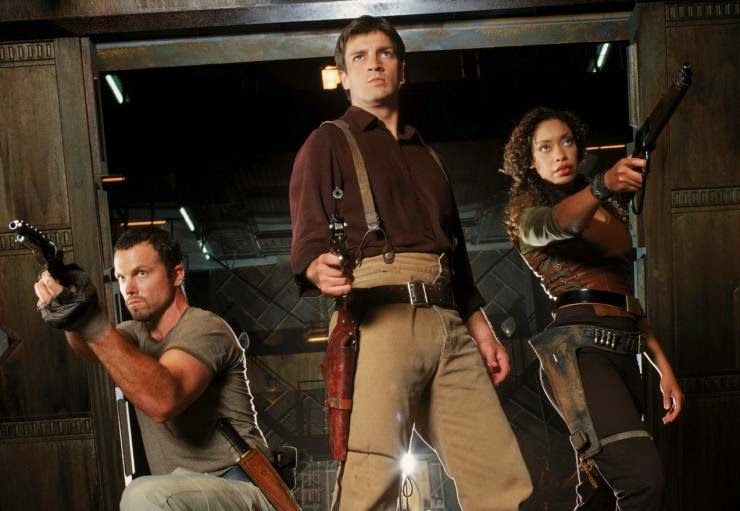
It's Blade Runner-slash-every
buddy-cop drama ever!
What's not to like? 
This is not a political rant. I don't give a split fig about Rupert Murdoch or Bill O'Reilly or what all the puffed-up bubble-headed self-important liberal college professors and community organizers refer to as "Faux News."

No, my beef is with the television executives who sit around in board meetings and decide to cancel my favorite TV shows.

It's been recently announced that the science fiction police procedural Almost Human, which aired last fall, won't be picked up for a second season.

This is the same depressing news that I got in 2012 when I heard that Terra Nova had been canceled, and the same monstrous injustice I and the other Firefly fans who came late to the game execrated when we learned that this fantastic show consisted of just 14 episodes.

Thank goodness Marvel's Agents of S.H.I.E.L.D. is on ABC, and is therefore safe from Fox's meddling, or I might have a complete psychotic breakdown.

Seriously, what gives? This is becoming such a trend that "Screwed by the Network" and "The Firefly Effect" have become official tropes. To quote from that life-stealing wiki, "Incidentally, many of these [canceled] shows (including Trope Namer Firefly) were on Fox — basically because Fox was likely to give the sort of show that gets this effect an initial run, but tended to be too Nielsen-sensitive to be patient."

Let me repeat that for you:

Too Nielsen-sensitive to be patient.

That's gotta be it. The ladder-climbing, insecure little weasels (I'd say "network executives," but that would be redundant) over at the Fox Broadcasting Company are so obsessed with making themselves look competent and keeping their stock high 
— in more ways than one — that they'll cancel a brilliant show if the Nielsen ratings are anything less than stellar.

Now, I know what you might be thinking, particularly if you're like everybody else on the face of the freaking Earth and think Almost Human and Terra Nova were terrible shows. (If you do, then what are you doing here? You should be pounding sand, too.)

You're thinking, "Where's the injustice in that? Almost Human didn't have good ratings, so it was canceled. QED."

Ratings aren't that simple, buster. Evidence suggests that Almost Human's ratings were out of its control for half its run. Firefly's doom was spelled out when Fox aired its episodes out of order and inexplicably stuck it in the "Friday night death slot." Terra Nova had 10.8 million viewers and a 3.6 rating, but the execs were worried about the price tag, and they also (wrongly) believed that a mid-season addition called Touch would be the next big hit.

It's Lost with dinosaurs! What's not to like??

I'm not a critic. I'm not going to launch into a big long spiel about why these shows are lost treasures. I'm not going to tell you how Terra Nova was "unlike anything else on TV," and that it "found its creative legs late in the season" (the article I linked to previously does that quite eloquently). I won't mention how Almost Human was just what the doctor ordered, a by-the-book police procedural with a lighthearted, humorous undercurrent, with the added zest of its dystopian-but-somehow-still-gorgeous futuristic backdrop. I have no need to declare Joss Whedon's script-writing talents godlike, and that the cinematography, dialogue, acting and story of Firefly are second to none. That's been said before by irate fans and gushing magazine columnists the world over. 

It's cowboys/Civil War veterans IN SPACE! What's not to like???

Almost Human and Terra Nova have their shortcomings, I know. The special effects and the acting aren't perfect. Pacing, characterization and story are sometimes lackluster. Everyone I know at my workplace and on Facebook loves to point out how shoddy, unengaging, static, formulaic, boring, unbelievable or artificial they are, with flat characters, unsatisfying stories and flawed concepts. But as the Guardian's pithy Glaswegian Graeme Virtue points out, the first seasons of these shows are like "the early, rough-and-ready EPs of your favourite band." Yeah, sure, the lyrics are canned and superficial, the garage-band sound is fuzzy and inexpertly mixed, the guitarist's fingers are still bleeding and the drummer hasn't found his rhythm yet, but isn't that the fun of it? Getting in on the ground floor? Liking a band because of that raw, pristine concept, the fundamental sound down deep beneath those shaky riffs and uneasy vocals? Following them while they mature into the next KISS or Zeppelin or Floyd? Watching them find their cadence, their vibe, their niche, and fill it out like a piece of loose clothing they're growing into?

That's been one of the joys of watching Marvel's Agents of S.H.I.E.L.D. Yeah, sure: it was soulless early on. A lot of people tried watching it and quit in disgust. But if they'd had the patience (unlike your average Fox network executive) to stick with it, they'd have discovered a true wonder: a flower blooming, a vine twirling its way around a beanpole, a seaweed-strewn ship emerging from its watery grave where once only the rotting, sun-bleached mastheads were visible. Watching M.A.O.S. get into its stride, establish its characters and its world and then cut loose like a slipshod stallion kicking his way out of a barn has been...well, a real kick. It's probably true that you have to be a fan of the Marvel Universe (or at least Agent Phillip Coulson, or at the very least Clark Gregg) to like the show. And you have to sit through those awkward first few episodes wherein the groundwork is laid. But then the show gets its hooks into you. Firefly and Almost Human did it during their pilot episodes, and Terra Nova managed it in the season finale.

It's just a travesty that these three shows will never have the chance to revel in the worlds they worked so hard and long to build, thanks to the pusillanimous, apple-polishing, money-grubbing swine at Fox.

That, ladies and gentlemen, is called injustice. And it's also the reason that television sucks so hard in this day and age.

Rant over.

Friday, April 18, 2014

the wreck of the Sewol

Well, your TV and news sites are probably teeming with stories about South Korea right now. I wish there was a happier reason for it than the sinking of the Sewol, a large Japanese-built ferryboat hauling nearly 500 people, which sank in the western fringes of the Korea Strait on its way from Incheon to Jeju Island.

                                                                                                      Yonhap News

You're probably familiar with the specifics. Just a few minutes before 9:00 a.m. the passengers on the ship heard a loud bang and the ship started to list severely. A distress signal was sent at 8:55 a.m. The Sewol's captain, Lee Joon-seok (who was recently arrested), failed to issue any sort of evacuation order for a critical 30 minutes, at 9:30 a.m. The ship sank further, rolling over and becoming almost completely submerged by noon, with only the bow remaining above water by 2:00 p.m. The ship in its entirety has since sunk and settled on the bottom 90 meters below the surface. 


Horrifying, heartrending and heroic stories have risen from this disaster. Twenty-nine people are confirmed dead, 174 have been rescued and 239 remain missing. It's a well-known fact that 300 of the 476-odd people aboard were young students from an Ansan high school. (In an earlier draft of this post I wrote Incheon, but I was in error.) One of the crew is rumored to have lost her life ensuring that all passengers had their life jackets. Heartbreaking tales of the students texting their parents and relatives from the wreck on the bottom of the ocean have populated the web. 

Controversy is among the most prominent survivors of the Sewol wreck. Two at the moment are occupying my attention, and they are both mentioned in that link I posted up there about Captain Lee being arrested. The first is Lee's refusal to issue an evacuation order for a full 30 minutes, which has rightly come under harsh scrutiny and criticism; and that the helmsman, Cho Joon-ki (also arrested) made a "sharp turn" just before the bang was heard. He admitted that he was "familiar" with the operation of the helm, but that the wheel "turned farther than expected." This has led to speculation that the turn was too sharp, dislodging some of the containers in the hold and perhaps compromising the integrity of the hull, leading to the sinking. Other parties maintain that a hidden rock was to blame, but that doesn't make sense to me. Ferries have been traveling up and down that same route for decades. If there was a rock, surely it would have been detected by now? 

It seems that, as is commonly the case, human error is to blame for the horrific loss of human life. The ship's authority figures failed to act in a sagacious manner, trapping hundreds of innocents in the wreck of the vessel. 

To many abroad and in the West, this may seem like "just another disaster." Another captain asleep at the wheel, like the Costa Concordia in 2012. But it's more than that, folks. This catastrophe has shaken South Korea right down to its roots. Many of my students at Sejong University are tremendously disturbed, not just by the deaths of so many young ones but the accompanying implications. 

What implications, you ask? 

I've explained before that Korea has a strong Confucian mindset. This has been the case since the Joseon era (1392-1910), when Neo-Confucianism came to dominate the Korean court and both Buddhists and Christians were severely repressed. One of the fundamental tenets of Confucianism is unflinching obedience to one's elders and betters. Korea and China, during their medieval days, had rigid hierarchical societies. Things like birth, wealth, occupation, and even surname determined one's position in the caste system. When confronted with a member of a higher echelon, one must show them the greatest respect. To do anything else would be to violate sacred societal mores and traditions. It goes without saying that children must obey their parents and grandparents as a lowly foot soldier would obey a general. 

And that's precisely what the children aboard the Sewol did. They wanted to evacuate, to leap off the ship into the cold grey seas and swim for their lives, but Captain Lee, their elder and better—whose mind was paralyzed with fears that his passengers would drift away and be lost in the turbulent waters—ordered them to stay put. So stay put they did, in the cabins and corridors. And there they remain. 

Needless to say, many minds in Korea—particularly the younger ones—are beginning to call this whole Confucian system into question. This disaster has highlighted its fundamental weakness: what if the authority figures in question are pure-D wrong? There's little point in unquestioningly following a leader if he or she hasn't got the brains of an ice cube. Many Japanese samurai might disagree, but this isn't the Warring States Period, guys. This is the 21st century. And now, young folks across the Korean peninsula are wondering whether the Confucian ideal is, well...ideal anymore. One of my students, normally chipper and articulate but grave and hesitant when I spoke with him, told me that he couldn't really process the whole affair. 

"I love my country," he said. "I believe in Korea. But this disaster has made me question everything." 

Everyone feels that way, partner. My fiancée, a die-hard Titanic buff, has been quiet and subdued the past few days, shocked to the core that a major maritime disaster such as the Sewol sinking can still happen in this day and age. I must confess that it all seems a bit surreal to me. It's hard to believe that only a few hundred kilometers from where I sit, down in the muck at the bottom of the Korea Strait, sits a capsized ship filled with hundreds of people who may very well be siblings or relatives of the twentysomethings I teach. 

My thoughts and prayers are with them. May justice be served to those at fault. 

Friday, January 17, 2014

30 Days to a Better Man, Day 18: find your N.U.T.s

That there may be no speculation, "N.U.T.s" means "Non-negotiable, Unalterable Terms."

They're related to your core values, which we discussed during Day 1 of this challenge. The example The Art of Manliness article gives is this: if one of your core values is fitness, then one of your N.U.T.s could be "I will work out six times a week, no matter what." As the article so adroitly states, "N.U.T.s are the things you’re committed to, the things that matter more than anything else: your kids, your career, your primary relationships, yourself, your purpose, your spiritual practice, your hobbies, your integrity, your morals and your psychological well-being."

Before we start, take a look at this picture, here:


That's Hiroo Onoda. He was in the news recently, but not because he has way too many Os in his name. The guy was a Japanese soldier in World War II, left behind and isolated on a Philippine island in 1945. He had been ordered by a superior to keep fighting. So he did. He refused to believe the war was over. He dismissed the newspaper and radio reports. Even when his own people dropped leaflets on him telling him to surrender, he thought they were Allied propaganda meant to demoralize him. He slept in a hole and lived off the land, waging a shadow war with the local Filipino population. He had some squad-mates with him in the beginning, but two of them surrendered in the 1950s and the other was killed in a skirmish with Filipino militia, I believe. Onoda finally capitulated in 1974, 29 years after the war ended. After a Japanese student found him in the jungles of Lubang Island near Luzon and sent his picture to some government bigwig, Onoda's former commanding officer (now a balding librarian) was flown in from Japan to personally order the steadfast soldier to stand down. Onoda handed over his sword and left the island. He then lived out the rest of his life as a peaceful citizen of his native land. He died yesterday at the age of 91.

Now, don't get me wrong. The Imperial Japanese Army doesn't have the cleanest rap sheet. Onoda may not have personally had anything to do with that, but he did kill some innocent Filipinos during those three decades as a holdout. I don't admire him for it.

What I admire him for is that unshakable sense of duty which led him to (literally) stick to his guns for 29 years, despite the whole world telling him to throw in the towel. Think about that for a second. Reach way down inside yourself. Is there anything you believe in so strongly that you'd be willing to give up 29 years of your life for it? Even then, do you truly think that you've got the determination and the stick-to-itiveness to do so? 


Onoda believed so hard in his duty as a soldier and a subject of the Emperor that he did just that. He put his money where his mouth was. He gave up thirty years of his life fighting a war he didn't know he'd already lost. In 1974, when he was discovered, Onoda's rifle was in perfect condition despite sitting in a jungle for three decades. He had stockpiles of ammunition and food which he stole from the locals. He was a literal one-man army, and he did it 'cause he felt he had to do it. Voices must have whispered to him a thousand times, a million times: stop, desist, stand down. He must have been tempted to listen to the news reports. To believe the rumors he'd heard. To turn himself in and go home. But he didn't. He never gave up. Something down deep in his soul, something made of furnace-forged steel, compelled him not to quit until his commanding officer told him otherwise.

If that isn't a N.U.T., I don't know what is. There's a reason Onoda's on this list of real-life Determinators.

So! Here are my N.U.T.s. You may think I spent a lot of time agonizing over these, but I didn't. Truth be told, I've already done this challenge. This was a separate AoM article before it was part of this 30-day challenge, and I saw it, and just for kicks I brainstormed and wrote some ideas down. I couldn't find the notebook I wrote them all down in, but I remember them pretty well. I've reproduced them here for you: 

1. I will not refrain from doing something just because my mind thinks it's scary.

2. I don't trust first impressions. I'll try anything twice.

3. I don't need to justify my choices or my actions to anyone but myself.

4. I see things through, but only if I decide that there's a good reason for doing so.


5. I say nothing about anyone behind their backs that I would not say to their faces. 

6. I accept jokes made at my expense with grace and good humor.

7. I never lie: I say what I think and I mean it.

8. I will never be satisfied with the man I am, and constantly strive to top myself. 

9. There is never a wrong time to learn. 

10. Skills can always use improvement. 

11. I waste minutes and hours, but not days: every day I write, move, live, and experience.

12. Everyone, no matter who they are, has something they can teach me.  

13. I judge movies, books, and albums by their covers, not people.

14. There is more to life than my life. 

15. I am aware of my bad habits and I combat them actively.

16. Humanity will remember me for something. 

17. I will leave this planet a better place than I found it. 

This is only the first draft. I'm going to refine these during the final weeks of January. Something should probably be thrown in there about my commitments to others: my job, my family, the love of my life, etc. But for starters, this is what we've got. What do you think, dear reader? Are these good-lookin' N.U.T.s? 

Wednesday, January 1, 2014

30 Days to a Better Man, Day 1: define your core values

A natural consequence of my life as an autodidact was the realization that, in addition to improving my mental capacity, I could stand to improve other aspects myself as well. Man does not eat of the Tree of Knowledge alone. There's a lot about me that could use some work. I'm in horrible shape, for one thing. And the term "emotional health" makes me, a red-blooded American man, think "Ewww, cooties." I could definitely use a shot of confidence, too. I've written hundreds of thousands of words and haven't gotten a single novelette published.

So! To that end, I hit upon the idea of doing Art of Manliness's Be a Better Man in 30 Days challenge. Why not? It can only help, right? Another year has gone by. It's January 1, 2014. I have once again realized how much of a lazy slob I can be, and how lacking in the most basic manly competencies I am. It's time to take matters in hand, and this challenge is just what the doctor ordered. I'm twiddling my thumbs at home for the entire month of January, and this will dovetail nicely with my writing-and-exercise regimen. The benefits are twofold: I'll be shouldering a new challenge (which has become a hobby of mine recently) and I'll take a delightful romp through the well-trod but classy Garden of Manliness. Classical manliness, none of this Billie Joe Armstrong skinny-jeans-and-eyeliner emo crap.

I understand, of course, that no Internet article can tell you how to be a man. But it can give you some handy tips on how to run your life, which if followed can improve the average man's mental, physical, financial and emotional well-being. If I take some of these lessons to heart, this challenge will make me more independent and confident in my doings, give me a more versatile skill set, impart clarity and certainty to my beliefs, and make my life just plain simpler.

This, then, is Day 1: Define Your Core Values.

I've been messing around on AoM for some time and they have a plethora of useful, timely, relevant, well-written and pithy articles. I agree with their judgment that manliness is a lost art, and much effort should be put into bringing it back. I've actually attempted a few of the items on this list already (and some of them I've already done), but not this one.

The main idea behind this challenge, as AoM states, is simple:


When I look at photos of men from my grandfather’s and even my dad’s generation, I can see a sense of purpose in the eyes of those men. Yet when I look at men today, I often don’t sense that kind of steely focus. Instead, I see dudes who are just sort of drifting along whichever way life pulls them. 
I’ve heard a lot of men my age complain of a sense of shiftlessness. They don’t have the drive, purpose, and ambition that our forebears had, and they feel adrift.
And this isn’t some sort of cranky old man observation about “kids these days.” Several books and articles by sociologists back up these observations.
There are numerous factors why men are just sort of drifting by today. Changes in the economy and societal shifts in regards to gender are definitely two major factors. But, let’s be honest. There’s not much a man, let alone a man stuck in neutral, can do about these things. So, today we’re going to focus on something that we all have the power to control: our core values.

I used to be a drifter. I was indecisive, dissolute, hedonistic, and lazy. I was just sort of coasting along all through my early twenties. I wanted to travel, I wanted to write, I wanted to fly, but I didn't have the drive to accomplish these things, or even a clear idea of how or when I would do it.

Today, I've learned better. I'm still indecisive, dissolute, hedonistic, and lazy, but now I actually care enough to do something about it.

I followed the directions outlined in the article and I came up with some ideas for core values, scribbling them down in one of the trusty notebooks scattered about my apartment. I'm putting them up here because I need to have accountability. I would like you, dear readers, to call me on anything I've put down which is weak or vague or unworthy. Censor me, if you will. Cherish the opportunity, for it shan't come again.

Without further ado, reproduced here for your consideration, are my core values: 

     1. CONFIDENCE. The lack of this has plagued me my whole life. It's kept me from leaping at opportunities that I would have cherished: submitting short stories and travel articles for publication, dancing with pretty girls, shouldering new responsibilities at work, acting in school plays, volunteering at magic shows and carnivals, and taking helicopter rides, to name a few. (That is correct: at the age of six I chickened out on riding in a helicopter. Me, the future pilot.) Confidence is hard work, but it's infinitely rewarding. I learned that when I got my pilot's license. When I first started flying, I was deathly afraid of screwing up and crashing. Overcoming that fear and becoming a more proficient flier made me more confident man. I'll never forget that feeling of triumph. Nowadays, even if I'm not sure I can do something, I give it a shot anyway. When I'm afraid of something, I have to challenge it. I have the confidence to pursue my goals, voice my opinions, and stand against the liars and fools. 

     2. HUMOR. An odd one, perhaps, but this has been a core value of mine ever since I was a kid. It's how I got through high school. Making people laugh was the only way I knew to get noticed, to be remembered, to be somebody. Subsequently I discovered just how genuinely good it felt to make people laugh or just crack a smile. Humor puts people at ease, smooths over conflicts, breaks the ice, and brightens a dark day. It's been my constant companion, even if I don't do it right all the time. 

     3. INTEGRITY. This is where I'm the most deficient. I am the most dissolute bugger ever. For the past five years I've promised myself that this year, I'll get in shape. Every year I continue to sit around on my duff and eat horrendous food. My natural inclination toward hedonism and Epicureanism have undermined my attempts to be healthy and get in shape. It's not just the physical arena that needs improvement, though. I often promise people (or myself) that I'll be more assiduous in my habits or more careful about my words, and then I'll turn around and commit the same old sins. I can be ill-tempered, impatient, selfish, hypocritical, immoderate, lazy, excoriating, insulting or just downright cruel at times. No more. A true man, in my opinion, does what he says he's going to do. And he only says he's going to do it once: he doesn't keep making the same promises over and over. Less talk, more action — consistent action. That shall be a clearly-defined value of mine from hereon out. There's nothing more satisfying than saying something and meaning it — and then living by it.
   
     4. GROWTH. Perhaps the most general of my values. There's a lot that falls under the label of "growth." It encapsulates all of the above values, for starters. I want to become more confident, more humorous and more consistent. Beyond that, though, I want to be smarter. I want to learn about the stuff I don't know about, fill in the gaps in my brain, continue by never-ending quest for knowledge. More importantly, I want to be wiser. At 27, I've experienced a few of life's lessons and learned them well; some of them I'm only just coming to know. Others surely await in the dim and unknown future. I want to be the kind of man that laughs at hardship and strives harder in adversity. I must learn to be kind to the unkind, forgiving to the unworthy, and temperate in all things. I want to be stronger (mentally and physically), funnier, kinder, and more discreet. I want to sharpen my skills, hone my mind, sculpt my personality, reflect upon life itself. I believe in being true to myself, my home, my relatives, my friends, my loved ones and my upbringing — to have that integrity I mentioned above. But I believe in the journey also. I hope I never stop learning to write, to fly, to be a human being.  
 
     5. LEGACY. Values are not goals. They are not something you strive for, nor boxes to be filled in, nor items to be scratched off a list. They are values: adamantine beliefs which I hold and cleave to. And I believe, firmly, that I have a job to do here. There's some karma that controls my destiny. I have a purpose to fulfill (and fulfilling it will be very fulfilling). That purpose, dear reader, is not my personal contentment. I used to believe it was, but I've come to know better. As Ralph Waldo Emerson said (emphasis mine), "The purpose of life is not to be happy. It is to be useful, to be honorable, to be compassionate, to have it make some difference that you have lived and lived well." There you are: my job is not to be happy, but to be a useful man, not a waste of space. I hold Emerson's words in my mind every day. The purpose of my life is to live well and make a difference. What difference? Will I reinvent the wheel? Cure cancer? Bring world peace? Champion a new age? Well, no. Probably not. I don't want to, either. I'll leave that to the dreamers and the eggheads. I'm just a humble geek and inveterate hack writer. All I want to do is write a bunch of books that make people laugh, cry, smile, scratch their heads, and wonder about the true nature of humanity and the Universe we live in. That's all. If some post-human race from the year 10,000,000 A.D. finds one of my sci-fi novels in a time capsule, translates the barbaric chicken scratch on its wood-pulp pages, and is somewhat amused by the comradeship and high adventure within...then my time on Earth wasn't wasted. 

That's it. Five core values. They have been defined for your reading pleasure. AoM says you're not supposed to have more than five, and I concur. Five's a goodly amount. Any more and you start to forget what you stand for, and making correct choices becomes more difficult. It wasn't hard to think of these. I've been mulling them over for quite some time. Perhaps I've known them all along, and had to put words to them to understand them completely. I'm glad I did.

So there you have it, readers! The things I stand for. Are they satisfactory to you? Suitably explained and outlined? If so, then the ball is in your court. Don't accept any more of my pathetic excuses. If I say I can't do something, or make a poor choice, call me on it. Use my own values against me. Delineating them is only half the battle; living up to them is the other. I'm going to try to do that for the rest of this month...and beyond. Tune in tomorrow for Day 2.

Oh, and Happy New Year.

Monday, December 9, 2013

Paul Theroux kicks through again

Wow, that post about territoriality sure was pretentious, wasn't it? Well, there's a reason I christened this blog "sententious" from the get-go. I know what I am and I know most people won't have the patience for me—least of all me, when I've grow up and matured a bit.
 

That's partly why I like traveling, you know. It's a growing experience. A revolution. The world gets thrown on its ear, and without even knowing it you've ridden an elevator up through the clouds and can finally see all 'round. Your own little world looks smaller than it was, and everyone
else's problems are thrown into sharp relief, and life seems just a little bit better.

But enough of me talking like I know anything. I just got kicked in the head again. And you-know-who was behind it all.

That's right, Paul Theroux has kicked through again.


I was talking to one of my coworkers a few months back. He also happens to be a fan of Theroux, and naturally we discussed his most famous work, The Great Railway Bazaar. Then the talk turned to the book Theroux wrote as a follow-up to that beast of a book: Ghost Train to the Eastern Star. My colleague had read it; I hadn't. I came in to work this morning to find the book on my desk, deposited there by my saintly benefactor. Unable to resist temptation, I opened it up and thumbed through the first few pages.

The first thing that greeted my eyes was this:

Most writing about travel takes the form of jumping to conclusions, and so most travel books are superfluous, the thinnest, most transparent monologuing. Little better than a license to bore, travel writing is the lowest form of literary self-indulgence: dishonest complaining, creative mendacity, pointless heroics, and chronic posturing, much of it distorted with Munchausen syndrome. 

Well, that was a hell of a thing to crack a book and read. I should have known if I touched anything by Theroux that the old bugger would strike at the heart of the matter and unload a pithy magazine of weaponized wisdom at me. The words were simultaneously enlightening and humiliating. There was no denying that I'd indulged in every one of those cardinal sins in my own travel writing. I realized just how pretentious I've been. Even my mere intention to become a travel writer was the lowest form of conceit. And let's not get started on the prose itself: it dips toward the "mendacious, pointless posturing" end of the spectrum.

After about two minutes of genuine, unfiltered chagrin, I made myself a promise: no more. I'm not going to jump to conclusions. I'm not going to maunder, I'm not going to complain, I'm not going to criticize unduly. Heck, you'll say. You're only 27, kid. This is the time to be a stupid young dreamer with a lot of high-flown ideals based on stuff you've heard and seen and not experienced.

Well, yes. But for that same reason (that I'm 27 years old) I'm starting to get the idea that there's more to life than high-flown ideals and attainable perfection and lasting legacies. Case in point: I had an odd feeling the other day. I had the feeling that my life wasn't infinite, and that I wasn't invincible, and that the mark I'd planned to make on the world might not be as grandiose as I'd envisioned. I started to get an idea of just how fleeting and transient a single human existence (mine especially) really is, and the thought was humbling. I felt like I'd had a moment of real wisdom for the first time in my short life. I've known for a while now that all that posturing that I and others had done in high school hadn't been worth a squat, and hanging out with friends in their lower twenties has long been insufferable. But this was the first time I'd come close to feeling...well, old. It wasn't just the inchoate, vague fear of being old that all young people experience. The thing itself.

Crazy.

Anyway, I'm serious about this. As serious as I've ever been about anything. As serious as anybody who pretends to be wise can be. As serious as any former twenty-something who smoked and drank and partied and passed out in unmentionable places can portray himself to be. No more sanctimonious conclusions. No more unjust, inflammatory complaints. Let's just see what happens to my writing when I try to go for pure, unadulterated description. A little experiment, we'll call it.

I'll have lots to write about, trust me. I solved my dilemma: 
the final results of the V.D.Q. are in.

Remember the V.D.Q.? The Vacation Destination Quandary? It bedeviled me for the longest time. I couldn't figure out where I was going to go during my two months of vacation. I scratched Malaysia, as the only things you can do there, it seems, are eat delicious food and sprawl out on a beach. Not my cup of tea, not during the height of winter. I scratched Mongolia, too, as the only thing you can do there in the winter is freeze your man-marbles off. With much reluctance, I also scratched Australia, since the $1400 round-trip airline ticket was just too much. I waited too long, dang my hide.


So...Hokkaido it is. I'm making the reservations as I type this. And I had an epiphany in the shower this evening. Instead of taking the old Trans-Siberian Express back through Russia when I'm done in Korea, the way every expatriate under the sun, why don't I take the bull by the horns and go back via Central Asia? Go by train through Mongolia, China, Vietnam, Cambodia, Thailand, Bangladesh, India, Kyrgyzstan, Kazakhstan, Uzbekistan, Azerbaijan, Armenia, Turkey, Bulgaria, Romania, Hungary, Slovakia, Poland, the Czech Republic, Germany, the Netherlands, Belgium, France, England, Scotland and Ireland? That's, what—26 countries? The Great Railway Bazaar in reverse, almost.

That would make me feel a lot more like a world traveler. 

Monday, December 2, 2013

territoriality: a discussion

It's high time I did some more sententious vaunting. This here's one of my rare opinion posts. Let's begin with a definition:

territoriality

ter·ri·to·ri·al·i·ty
[ter-i-tawr-ee-al-i-tee, -tohr-]

noun

1. territorial quality, condition, or status.

2. the behavior of an animal in defining and defending its territory.

3. attachment to or protection of a territory or domain.


And let's follow that up with a basic truth: the concept of territoriality applies to human interaction as well. We build fences around our houses, put up NO TRESPASSING signs, and feel more at home in our native towns, counties, states, provinces, and (naturally) territories than anywhere else.

It's that specific aspect of territoriality I want to discuss, actually.

Traveling and living in foreign countries is a growing experience. It's a baptism by fire, a crash course in open-mindedness, cultural exposure, language barriers, communication disasters, culinary misadventures and homesickness. You feel it the moment you step off the plane. Everything's new, and it's scary. People are talking in tongues you can't understand. The signs are unreadable. Often the people themselves look completely alien to you, and it's a lead-pipe cinch that they'll think and act in different ways. This makes travelers apprehensive and twitchy and throws us all off our chumps. Eventually, with successive jaunts and expeditions, we get used to the otherness and can relax and enjoy our trips with relative ease.

But one fear never goes away.

In addition to the surface nervousness that traveling engenders within us, there is also something more primordial: a creeping, furtive sort of nervousness, an ever-present low-key fear. It's not just the unfamiliarity of our surroundings. It's the simple fact that we're off our home range. We're on someone else's turf, so to speak. We're in a foreign land, with different laws, mindsets, philosophies, mores, and etiquette. We're in someone else's backyard, and they know it like the back of their hand, and we don't. We, the interlopers, won't be torn limb from limb if discovered by the natives, as happens to wild animals who stray too far from their territory. But the inchoate threat of such still lingers in the reptilian parts of the human brain, and we feel that fear whenever a foreign shore heaves into sight on the  distant horizon.

Even after living in South Korea for something like three nonconsecutive years, I still get the willies on occasion. If I could speak the language better, I wouldn't have 'em so often. But even if I was a whiz at Hangul, that primordial fear would still be there. I'm in Asia, where the rules of the game are elementally different from what I know. The sun still rises and sets, and the tides go in and out, but those are the only similarities. The Koreans have their own ideas about commerce, social relations, gratitude, etiquette, politeness, interpersonal nuance, humor, entertainment, morality, fine dining, hard work and whatnot. Furthermore, the Korean civilization is thousands of years old, far outstripping my own country's paltry history. The enormity of those ages weighs upon my shoulders like a millstone at times.

I feel the opposite effect whenever I return home to the States. I exhale literally and metaphorically. Everything makes sense again, imperfect as it may be. The signs are legible. People's slang terms are comforting. That sense of oneness with my surroundings comes flooding back to me. I feel ready to turn and do battle with whatever extraterritorial threats hounded me home. Your turn, you bastards. You're on my block now.

And you know what? I think that's a good thing.

Culture shock, homesickness, and otherness are shoots which spring from the same seed: territoriality. The feelings of attachment or protectiveness we harbor for the land of our birth. It exerts a powerful, formative influence upon us, and rightly so. The stark reality of it is impossible to deny, deeply biological as it is. Americans have their territory, Koreans have theirs. I'm intruding, plain and simple. Never mind that the immigration office stamps my passport and lets me live and work here for a year at a time. I'm an alien freak. I have the children's stares to prove it.

Of course, there are other, darker shoots of that same territorial seed. Things like bigotry, prejudice, and racism are also tendrils of territoriality. But there are positive effects as well: patriotism and nationalism, for example.

Many will disagree with me on this. Some of you may be shaking your heads right now. In your minds, the argument is coalescing: "Some of the most horrendous atrocities have been committed in the names of patriotism and nationalism!"

They have, no doubt. But I still say that devotion to, fondness for and belief in one's country and culture are healthy things for an upstanding, free-minded individual to have. I think that notion of otherness isn't a stumbling block, but rather a step stool. It's a platform with a telescope, a hill to climb, steep and rocky perhaps but a great place to pause and peruse the sunlit uplands beyond.

I believe (especially as an American) that we're sort of shamed into forsaking our nationalities when we're out on the road. We're encouraged to forget who we are and where we came from, and be totally open-minded as we view other countries, cultures and customs. Viewing anything through the lens of the culture we were born into is frowned upon. Bigotry, it's called. Prejudice. Willful ignorance.

I disagree.

I think you have to judge the entire world from the perspective of your own tiny slice of it, because you'd have to be a robot to do otherwise. Only a mindless automaton is capable of ignoring its own heritage and upbringing and judge something with perfect objectivity. As G.K. Chesterton warned, "Do not be so open-minded that your brains fall out." Stay judgmental. Be biased. Cultivate prejudice. You need a basis, a foundation upon which to judge what you see, and your background is well-suited to it. As long as you're a righteous human being (and I already know that you are), then you won't fall into the bottomless pits of prejudice or racism or ethnocentrism. You'll be fine. Rock on. You need that cultural context of yours to form sound opinions of what you see and hear abroad.

D'you see what I'm saying, here?

I'm starting to think I'm the last person on the planet who feels that way. The paradigm is shifting. The world shrinks, technology advances, airplanes and boats and cars and trains move faster and with less energy, and the information superhighway reaches ever deeper into our lives. As the lines between cultures and continents begin to blur, the zeitgeist has changed. In talks with many of my more liberal friends, they have expressed nothing but disdain for the concepts of patriotism and nationalism. They shake their heads and say things like, "Murrica! F*** yeah!" in satirical tones. Some of the more extreme among them have expressed outright approval for a sort of "world culture," in which national boundaries are swept aside, the myriad cultures of the globes are integrated and amalgamated, and a sort of homogeneous global culture ensues, freeing humanity forever from the damnable vices of bigotry and racism.

Phooey to that, I say.

I don't know about you, but the whole notion of a "world culture," gives me the heebie-jeebies. You should take pride in your homeland. You should have some prejudice in its favor. You should be leery of the way other people do things. You should believe your country's the best in the world simply because you were born in it, as George Bernard Shaw once so scathingly wrote.

"Why?" I hear you ask. "Aren't you being an arrogant, ethnocentric pig? Won't people hate you for thinking that way? Aren't you being close-minded? Shouldn't you travel with an open mind?"

To which my answers are: No, yes, no, and yes.

Being territorial
—feeling uncomfortable in another country and safe and secure in your own, cleaving to an intrinsic, instinctive, subconscious kind of nationalism—isn't arrogance. It's only natural to believe that your country's the best. You did grow up in it, after all. But it's not just natural—it's evolutionary. This is your territory. It's your home, and it's a part of you, from the tip of your hairs to the marrow of your bones. You were fed on it, suckled by it,  knocked about by it in your youth. You've breathed it, swam in it, tasted it and slept in it your whole life. It knows you and you know it, and you have each other's backs. You should love it to death. Stepping out of your territory is frightening, strange and potentially life-threatening. That makes the challenge—and rewards—all the greater.

People will hate you for feeling that way. They'll call you a racist pig, a jingoistic idiot, an ignorant, short-sighted, narrow-minded fool. Don't listen to 'em. You know in your heart that you're not a racist. You know people are people, no matter where they're from. You know the difference between right and wrong, good and evil, and you don't attribute either of those things to a human individual just 'cause they're from a particular place. And as long as you know it, no one can touch you or make you feel like you're a bad person.

You're not being close-minded. You're open to new experiences. In fact, that is the whole point of traveling: to get out of your comfort zone. To leave your territory, those familiar shores and welcoming skyline, and venture into the unknown. There's the rub. Be territorial. Love your homeland, be wary or even leery of other people's, but don't let that stop you from going. Go there and find out how it really is. Then you can decide whether or not your preconceptions were accurate. What you're doing, if you're doing it right, is giving other people's cultures and societies the respect they deserve without fawning over them, worshiping them, or paying them lip service for political correctness's sake. By the Great Green Arkleseizure, folks, you're allowed to have an opinion. Just make sure it's founded on your own experience and a thorough knowledge of circumstance, not sweeping generalizations or assumptions. Just look at Paul Theroux. That's precisely how he writes his travel books. He's judgmental as hell. He'll lampoon anybody, be they an individual or a government, foreign or American. The point is to go and see, and then judge harshly...based on what you know is right.

That, my dears, is how you travel with an open mind. You have a context to work with: your culture. Hold that culture close to yourself, cherish it, be proud of it, but keep your heart and mind open. Let the ambient weirdness trickle in. You'll learn some startling things. Some of them will be as stupid or wrong or yucky as you always suspected. Many of them, however, won't be as bad as you thought
—and more than a few will be the exact opposite. You'll see sights you never dreamed existed, taste the milk of human kindness, add more capital to the bank of experience than you ever thought possible. But don't forget where you started. Don't lord it over anybody, don't put anyone else down, but for Pete's sake, don't be afraid to flaunt it. You are who you are. Be proud. Don't skulk about. Tell people. Everyone's just as curious about you as you are about them, or ought to be. They're all nationalists at heart, too. They may dislike you just because of the color of your passport. But you can forgive them for that, 'cause deep down you're judging the hell out of their clothes, their dirty fingernails and their country's cockeyed ways, and you can laugh inside at the crazy two-way nature of the universe. 

But how would this priceless sensation, this ability to learn about others, to understand how things are done on the far side of the world, down in the dust or up in the snow, on top of the mountains and in the deepest valleys and over the silvery lakes
—how would it be possible if we had one world culture? Where would your identity come from? What would you take pride in? How would you build that base, that context, from which to travel and peer into other people's lives? How could you judge their shortcomings—and their wonders? What use would travel be if everyone else thought and slept and breathed and loved the same way that you do? 

It wouldn't, and that's the truth. It wouldn't be any use at all.  


I don't want a world that's all the same. I don't want a world where I never feel ill at ease or out of place. I want a world full of mystery and weirdness and
otherness to explore. And I want a patch of dirt that I can come back to and feel at home in, unconditionally—but with a host of foreign friends and experiences rattling around in my head, heart and soul. I think it's grand that we're all different from each other, and that we have a little fear and perhaps aversion to one another (and our respective nations). Just because we travel and learn about the world doesn't mean we should lose faith in who we are and where we came from, or our belief in our own greatness. I think that sort of national pride fosters healthy competition, self-confidence, cultural self-esteem, and most importantly, our curiosity about each other. It makes the sun brighter, the water clearer, the air fresher and our friendships warmer. 

But maybe that's just me.

Patriotic enough for ya?


Monday, November 18, 2013

the Facebook parabola


We've just reached the peak of it.

I reckon I know when I'll be coming back into the fold: December 18.

I'm sitting here, sucking on a glass of Black Velvet (which I totally forgot I had until I did that post about how I see the world). There's a super-duper thunderstorm going on outside. It's only about 44 degrees and the rain is just pounding. This stuff must have started out as snow. Either way, it's bad news for all the homeless folks in Seoul right now. I hope they got to cover, especially the legless and armless ones. 'Tain't a fit night out for man nor beast.

With the idyllic evening in full swing, I figured, hell: why not give you guys a progress report?

I picked the above date for a couple of reasons which seemed pertinent at the time. Number One, it'll be the two-month mark. Exactly. Dead-on. Sixty days (more or less) without Facebook. Seems like a sound number. More than enough to break a habit, right? I can already tell the difference. There's a big change. I feel like my Internet use is healthier, I spend less time staring at screens, and I do more cool stuff outside the apartment now. I hardly miss my little blue friend anymore. My right hand has quit moving of its own volition. The only symptom that remains is that incessant urge to put my latest pithy platitude or ribald observation up in your news feeds. I might not resist that temptation, though. Folks I know on Facebook seem to enjoy them platitudes. I've actually gone so far as to make a list of witty Facebook statuses to put up retroactively when I get back on in a month.

Hmm...maybe I'm not as cured as I thought.

The second reason is that NaNoWriMo will be well over by mid-December. I want to make sure I finish that up (and have some time to keep going afterward).

Third: the fall semester will be done with. Final exams will be completed. I'll be in the midst of grading them, sure, but the daily madness of regular class will be past.

Fourth: I kind of need to be back on Facebook before I finish grading and go off to Australia and Hokkaido. Then I can put up all my lovely photos and make you saps jealous. There are some people I'm planning to rendezvous with while out on the road, too, and Facebook would greatly facilitate that process. I hate to admit it, but my little blue friend is good for something.

So there you go. Get set for my triumphant return, Facebook. I'm comin'. I hope to see you all at the reunion party.

Friday, November 15, 2013

how a Californian (like me) sees the world

WARNING: What follows is exceedingly general and perhaps a bit non-PC. I don't care, and neither should you. Au contraire, you should laud me for admitting my ignorance rather than disguising it. Consider this a list of what I don't know about the world (and hope to learn someday).

DISCLAIMER: You'll notice that I said a Californian like me. You can no more judge all Californians to be the same than you can judge all Dubliners or all Tokyoites to be the same. We're a mixed lot. But even among them, I am an outlier. I was born in Northern California, for one thing. I've lived in the capital, the Midwest, the American South, and the Great Plains, so I know a bit more about the rest of America than the average Californian does. My political views don't exactly match up with a lot of other Californians', either. I'm a white middle-class twenty-something, and proud of it.

Ready? Then let's begin:


THE REST OF AMERICA:

  • OREGON: Best known for portraying that forested planet in The Return of the Jedi. And being mispronounced by Midwesterners and foreigners alike.
  • WASHINGTON STATE: Coffee. Rain. Pine trees. Killer whales. Reggie Watts. Legal marijuana. Sententious living.
  • IDAHO: Potatoes.
  • MONTANA: Looks really good on a postcard.
  • NEVADA: Vegas, baby. And machine guns. The rest of it's desert. And Reno.
  • UTAH: Mormons! Who doesn't like Mormons? And saltwater?
  • ARIZONA: Simply marvelous gun laws. Cacti which are the envy of the civilized world. Gila monsters. Fatuous Nicolas Cage movies. Mountains that look like Indians.
  • NEW MEXICO: Are the rocks supposed to be red like that?
  • COLORADO: Best place to raise abducted children.
  • WYOMING: Fewer people than a single suburb of Los Angeles. Seriously, the antelopes outnumber the humans. Scary thought.
  • NORTH DAKOTA: I felt like a celebrity there.
  • SOUTH DAKOTA: Big stone heads. The Black Hills (yeah, baby). Wild Bill Hickok and Calamity Jane.
  • NEBRASKA: What the guy who thought of the phrase "middle of nowhere" was thinking of.
  • KANSAS: You're not there anymore, Toto.
  • OKLAHOMA: Bombs. Musicals. The Dust Bowl. Tornadoes.
  • TEXAS: If it weren't for them, Mexico would have invaded long ago.
  • MINNESOTA: So, like, let's go to the lake, eh?
  • IOWA: The Minnesotans are right. The best thing coming out of Iowa is I-29.
  • MISSOURI: My dad went to college there. Considers himself more Missourian than Ohioan. They've got an arch. That's the limit of my knowledge.
  • ARKANSAS: Most direct route between Tennessee and Oklahoma.
  • LOUISIANA: Bayous, swamps, Cajun food, levies, Mardi Gras, and hurricanes. Especially hurricanes.
  • WISCONSIN: Cheese.
  • ILLINOIS: Abraham Lincoln.
  • INDIANA: No friggin' idea. Maybe basketball?
  • KENTUCKY: Is the grass really blue, or is that just a figure of speech?
  • TENNESSEE: Too many mullets for my taste.
  • MISSISSIPPI: Hard to spell.
  • ALABAMA: Probably has the most likeable/least unpleasant Southern accent, depending on where you stand on Southern accents.
  • GEORGIA: Good peaches.
  • FLORIDA: Can't think of it without thinking of the auto-tuning rapper. Thanks a bunch. Before Flo Rida was a thing, I associated Florida with Scarface, my grandmother's house with the orange trees in the backyard, the one billion percent humidity, and the white-sand beaches.
  • MICHIGAN: They make cars there, don't they? And awesome music?
  • OHIO: Hot in summer, rainy in spring, miserable in winter, the most beautiful place on the planet in autumn.
  • WEST VIRGINIA: Coal. The Civil War. Trout fishing. Caves. Chuck Yeager.
  • VIRGINIA: This may sound weird, but I can't help but think of Virginia in terms of the famous people who were born there: Ella Fitzgerald, George C. Scott, Sam Houston, Meriwether Lewis and William Clark (yes, that Lewis & Clark), Patrick Henry, Robert E. Lee, Tom Wolfe, Booker T. Washington, Bill "Bojangles" Robinson, and, like, twenty U.S. presidents. 
  • NORTH/SOUTH CAROLINA: What's the difference? 
  • WASHINGTON, D.C.: Crazy homeless people in the streets, crazy people in the government.
  • MARYLAND: You need to put on some weight, you're too skinny.
  • DELAWARE: Sounds like a seldom-used word you'd find in a dictionary.
  • NEW JERSEY: Just as all myths have some basis in fact, the moniker "Armpit of America" must on some level be well-deserved. 
  • CONNECTICUT: Pretty. And filthy rich.
  • PENNSYLVANIA: The birthplace of liberty and independence. Looks nice in autumn, too.
  • NEW YORK: California's biggest competitor in terms of culture and coolness. They've got some pretty country, too; and heck, they even have their own version of the San Andreas Fault. We'll get you yet, you buggers.
  • RHODE ISLAND: Too small for my Californian mind to encapsulate.
  • MASSACHUSETTS: Baseball. Football. Clam chowder. Cod. Moby-Dick. Cheers (the TV show).
  • NEW HAMPSHIRE: The last stop before Maine.
  • VERMONT: The second-to-last stop before Maine.
  • MAINE: The last stop before New Brunswick. Also, Stephen King is from there; I do know that much. A lot of his books are set around those parts.
  • ALASKA: I know as much as everyone else does. Grizzly bears, gold, the Inuit, glaciers, the tallest mountain in North America, savage cold, bush pilots, hunting, cruises, trains, oil, fishing, formerly Russian, real men and real women. Oh, and I'd give my right arm and two or three toes to live there.
  • HAWAII: Palm trees. White-sand beaches. Turquoise water. Tropical fish. Sunshine. Ukeleles, luaus and leis. Volcanoes. Surfing. Pearl Harbor. The U.S.S. Arizona. Paradise on Earth. California's biggest competitor in terms of fun in the sun and water sports. Not bad if we can take on New York and Hawaii and still compete, eh?

THE REST OF THE WORLD:

  • MEXICO: Lovely beaches, great food, incredible culture, marvelous natural beauty, and good booze...but a corrupt government and a few too many all-powerful drug cartels. Oh wait, that's California.
  • CANADA: A dichotomy. On the one hand: nigh-socialism, a Governor General, and a certain amount of cultural snobbery (though that might just be the folks from Toronto). On the other hand: maple syrup, the Yukon, Nova Scotia, the Northwest Territories, British Columbia, Alberta, the Canadian Rockies, ice hockey, Shania Twain, William Shatner, Dan Aykroyd, Kim Cattrall, Stana Katic, Nathan Fillion (whom I hear is from Edmonton), Rick Moranis, Leslie Nielsen, Donald Sutherland, Alexander Graham Bell, Elijah McCoy (the real McCoy), James Howlett (better known as Wolverine), Anne Shirley (a.k.a. Anne of Green Gables), Chris Hadfield (the astronaut), Rush, Barenaked Ladies, Great Big Sea, dinosaurs, Black Velvet whisky, the Devil's Brigade, lentils, Swedish Fish, and some of the friendliest, politest people on the face of the Earth.
  • BRAZIL: Great barbecue, oddly-named mountains, and the best jungles and parties (and jungle parties) anywhere.
  • BOLIVIA: Butch Cassidy and the Sundance Kid got zonked down there, didn't they?
  • URUGUAY: It's all about the tango.
  • KENYA: I know Tanzania, Mozambique, and some of the other countries have amazing biodiversity, natural beauty and safaris, but whenever I think "East Africa," my mind just leaps to Kenya. Craters, rhinoceroses, the Serengeti, poaching problems, and now some election brouhaha. And a spectacular John Wayne movie.
  • SOUTH AFRICA: Let's move past the bit with the apartheid and get into Sharlto Copley, J.R.R. Tolkien, Basil Rathbone, Manfred Mann, Candice Swanepoel, and that sweet movie Zulu with Michael Caine. Just please don't mention Dave Mathews. We don't mention Dave Mathews on this blog.  
  • LESOTHO: See RHODE ISLAND above.
  • EGYPT: Revolutions. Pyramids. Rivers. Desert. Camels. Political turmoil. And they have their own version of The Daily Show.
  • MOROCCO: I only know where it is 'cause I watch Bogart films. 
  • CROATIA: It gave the world Serious Sam, so it can't be all bad, can it?
  • RUSSIA: I was born five years before the Berlin Wall fell, but I'd venture to guess that my generation's the first one that doesn't think "Commie bastards" whenever we hear the word "Russia." That doesn't mean I trust Putin or the KGB, but I sure would like to visit the country, ride their trains, drink their vodka, walk over their bridges, and so forth. Oh, and see St. Petersburg in the wintertime.
  • FRANCE: The other place an aspiring artist or writer might go besides California.
  • ICELAND: All of the wintry fun of Canada or Alaska with none of the urban sprawl.  
  • ENGLAND: Sorry, did I say Canada was guilty of cultural snobbery?! Though that could just be Londoners. Seriously, some of my best friends are from England. I wouldn't mind retiring to Newcastle someday, having fish and chips down by the quayside, a pint in the Turk's Head, then a walk 'round the priory and a pipe-smoke on the point. Geordies rock.
  • SCOTLAND: It gave us Scotch whisky, haggis, Robert Burns, Ian Anderson, and some of the world's finest and hardiest soldiers. I think a good many wars would have been lost without a few good Scotsmen.
  • IRELAND: The setting of another rather good John Wayne movie. If you don't think about the Troubles, you can get lost in the whiskey, the beer, the corned beef and cabbage, the stew, the River Liffey, James Joyce and the wild Irish countryside. Gotta love Chloë Agnew and Liam Neeson, too.
  • GERMANY: Efficiency. And cake. And philosophy. And awe-inspiring classical music.
  • SPAIN: Sunshine. And beautiful horses. Architecture to die for. Paella. Soccer. Bulls, and a lot of sports that shouldn't be combined with bulls. And tomato-chucking. 
  • SWITZERLAND: Americans voted it the best place to go if you're trying to escape from a German prison camp. I've heard they make pretty good watches and toys, too. 
  • INDIA: Outsourcing. Overpopulation. Sacred cows. Fascinating religions. Fantastic architecture. Pollution. Garbage in the streets. People pooping in public. The Ganges River, which I wouldn't dunk my worst enemy in.
  • VIETNAM: The site of a rather nasty and unconventional war. Now home to gorgeous waterfalls, delectable cuisine, a generation of suspiciously blond-haired Vietnamese, and tons of unexploded ordnance.
  • CHINA: Big. Really big. Filled with people. Controlled by a Communist government. Mao's noggin is everywhere. Still, even though fat guys go topless in public and toddlers poop in the streets, the trains run on time and the countryside is undeniably gorgeous.
  • JAPAN: My knowledge beforehand was mostly limited to World War II, anime and manga. Now I see the country through the Korean lens, and that colors my perception a bit. It's definitely one of Asia's bright stars, a broad, clean, polite and user-friendly country. But its foreign-relations record is a black mark in its ledger.
  • SOUTH KOREA: Before I came to live here, I knew the name of the capital and that the country got snow in winter. That's it. Now I know that, despite the bali bali culture that grinds students and salarymen into the ground, Korea has elevated itself from a smoking crater to one of the most prosperous, bright, advanced and innovative nations on the planet. The people, though bound by millennia of tradition and rigid societal and behavioral mores, are some of the most friendly and unconditionally kind folks I've ever encountered.
  • NORTH KOREA: If you're ever in need of a good laugh, just look up some of their propaganda.
  • AUSTRALIA: Deserts, mountains, jungles, forests, beaches, great music, good actors, some fantastic sports (and sports players), architectural wonders, storied history, a charming accent and some of the weirdest animals to be found.
  • NEW ZEALAND: Like some weird mix of England, Iceland, and Hawaii. But it did give us Peter Jackson, Lucy Lawless, Karl Urban and Bruce Spence, and some lovely glaciers.
  • ANTARCTICA:  Snow. Ice. More snow. More ice. Mountains. Volcanoes. Rocks. More snow. More ice. Frigid seas. Storms. Penguins. Blubber. Jules Verne, H.P. Lovecraft, Edgar Allan Poe, and every other adventure or horror writer who ever needed a remote, bleak, barren, ice-blasted place to set a secret base or an eldritch abomination.