Showing posts with label religion. Show all posts

Saturday, September 27, 2014

an evening in George Town, Penang

Travel Truth #7: Holidays and festivals can throw some delightful zest into your trip. Or a monkey wrench.

Things began to go seriously wrong the moment I stepped off the International Express train in Butterworth, Malaysia, fresh off the overnight ride from Bangkok. While the other passengers took the long walk up a series of elevated ramps to the ferry jetty, I turned right, crossed the tracks, and went to the station office to check on train tickets to Singapore. 

There weren't any. As in, none. Zero. Zip. Nada. 

I didn't realize that Ramadan leaped around so much. I thought it was pretty much a winter holiday, and that's that. I didn't comprehend that the vagaries of the Islamic calendar could place Ramadan, say, in the midst of summer, but so it had. It seems that I had arrived in Malaysia right at the beginning of Hari Raya Puasa, the "Day of Celebrating the End of Fasting." Today and tomorrow (July 28-29), every Mohammedan in Malaysia (and Singapore and Brunei and the Philippines) would be home with their family, stuffing themselves silly and giving thanks to Allah. All the train tickets back to Singapore were booked up through the end of the week. 

Shoot. 

Resolving to worry about all this later, I hefted by backpack, sauntered out into the broiling sunshine, and traipsed my way along the elevated walkways to the ferry jetty. 

The line was about 50 miles long. Twin rows of Malays (mostly young men, I noticed) stood upon the cracked concrete of the shady walkway, arms folded, talking amongst themselves as they waited their turn for a ride to Penang, a medium-sized island just a kilometer or two off the coast, its humped green back just visible in the hazy distance. There were a couple of portly, black-uniformed policeman patrolling the crowd, casting disapproving eyes at the loud and boisterous, their keen eyes seeking out any women and hustling them to the front of the line. One of these policemen spotted me. His eyes swept over me, taking in my misshapen hat, sweat-soaked clothes, lumpy backpack, and ridiculous flip-flop tan, and then darted away like a startled fish.

A second policeman with dark sunglasses came along a few minutes later and motioned me out of line and to the front. Gratefully, I humped my backpack another 200 yards, past a line that would surely have meant two or three hours of waiting, paid my fare, rode across the strait, and spent about a 30 fruitless minutes searching for my hotel (and nearly melting in the process) before a kindly cabbie picked me up and took me there.  

I checked into the Red Inn Court, which wasn't as new or modern or large as Boxpackers in Bangkok but nonetheless clean and serviceable. Thereupon I took three hours to cool off, both literally and figuratively. I also had to wait until after 6:00, when the noodle joints opened up. Then I sauntered into the gentler but still sultry evening, found an open-air greasy spoon crowded with locals (always a good sign) and ordered a plate of delicious, savory char koay teow, noodles stir-fried in rich dark sauce. This particular variety had chicken and shrimp. I sat across the table from a Brazilian fellow named Gabriel who lived and worked in Singapore, and found it horribly boring. We talked, mostly of the shittiness of Asian beer and the emergence of craft brew. 


I sloped a few feet west down Lebuh Chulia to the Hong Kong Bar, a cramped closet of a place with an eclectic mix of rustic decorations, Chinese paper lanterns and WWII British Army jungle hats being the most prominent. Best bar in Asia, bar none. I sat at one of the tables out in front, right next to a pillar, and had seven Tiger beers (for a total of 77 ringgit, or about $23.50). The sun set beyond Penang Hill, lighting the low, glowering clouds a lambent yellow ochre overhead and a fulgent papaya nearer the horizon. Drag queens, ladyboys, tourists, and benighted foreigners strode past and kit cars and scooters zoomed by at ridiculous speeds. I chatted with the Chinese-Malaysian proprietress, an English man and his articulate Chinese wife at the next table, and a youngish Russian woman named Eugenya. She was a scuba diving instructor and was living in Thailand, but was down in Malaysia doing a visa run. She and I were united by literature—both of us were quite well-read, and we discussed our favorite works, Russian and otherwise. One of the most controversial topics we discussed was the plus side and perks of racism—yes, we thought of several good ones. We shared a few off-color jokes between us, including ones at Russians' and Americans' expense. 

All in all, it was a magical evening. As I sat there with a bellyful of horrid Malay beer and the fires of a glorious sunset still dying a slow death in the western sky, the Chinese-Malaysian proprietress laughing at my jokes and slapping me on the shoulder, I could see myself happily moving to George Town and sitting in the Hong Kong Bar and doing some of my best writing. And living. 

Monday, September 22, 2014

Bangkok, day two: Wat Suthat and the Giant Swing

After I left Wat Phony I walked all the way around the National Museum, the royal palace and Wat Phra Kaew. Seemed to take hours, though it was barely one. No tuk-tuks today, remember? I'd promised myself. 

I'd originally intended to tour the palace and Wat Phra Kaew, but I changed my mind when I came around the corner of the palace wall and saw the pulsating throng crowding the main gate. White tourists buses kept rolling up and disgorging clamoring heaps of pudgy, fatuous, ridiculously-dressed Asian and European tourists, and I "couldn't get no show" as Mark Twain would say. I walked on, past the museum, fighting my way through the stagnant afternoon heat, trailing a japing pack of young Thai army cadets on a long and completely unnecessary detour around Saranrom Park. I probably should've stopped and strolled through this park, but didn't because another pack of army cadets was doing drills in it and I didn't want to have anything to do with the military while I was here. 

On the east side of the park I was accosted by a plain-clothed policeman of Chinese descent with a bristly, pencil-thin mustache and a whiny, nasally voice who wanted me to walk (or rather, hire a tuk-tuk) to take me to the giant standing Buddha at Wat Intharawihan. I nodded, said I'd consider it, and walked north to Wat Suthat (and the Giant Swing, which isn't really a swing at all). 


In this temple, I found Nirvana—or the closest thing to it on such a hot, miserable, swampy day. I sat down on the red velvet floor and gazed contemplatively over the enormous sitting Buddha, with his long earlobes and his languorous hooded eyes and his lips tinged with that old Angkor smile. I liked Wat Suthat better than any other temple I'd been in, and I've been to temples in six Asian countries. I've been to temples with Buddha statues of solid emerald and floors of pure silver, temples with heaps of glittering gold artifacts sitting at the Enlightened One's feet, temples saturated with the smell of incense and washed with the rays of the sun and the spray of the sea. To blazes with them all; I liked Wat Suthat. 


It was quiet. It was peaceful. It was airy and breezy and cool. There were hardly any phonies. The ceiling was high and vaulted and had all the quiet reverential quality of a church. The pillars and walls were coated in scenes depicting the life and trials of the prince Siddhartha, fantastically intact after all this time. There were a few worshipers—old men, mostly—quietly meditating and bowing. Electric fans hummed soothingly away in the background. I sat on the temple grounds for 40 minutes and inside the temple proper for 15, just soaking up the atmosphere (and drying off after my long walk). 


Monday, June 23, 2014

the Pope is coming

I noticed something interesting on the subway TV screens last week: images of Pope Francis interspersed with Korean churches and cathedrals. I didn't think much of it at the time, but a quick Internet check confirmed my suspicions.

The Pope is coming to South Korea. 

People.com

Between August 14 and 16, His Holiness, in his big heavy robes, will flit about this hot, steamy peninsula succoring the victims of the Sewol disaster, conducting Mass at various Korean cathedrals, presiding over the beatification of 124 Korean martyrs, and just generally doing papal things. There will be a parade near Gwanghwamun and (if the article I linked to above is to be believed) over 100 million people will be in attendance. 

I find that a little difficult to believe. This city's population is just over 10 million. I don't see how it could swell by 1000% and not explode. I don't think that many people could physically fit into this town, not even if they flung a bunch of pontoons into the Han River and turned it into a peanut gallery. 

Anyway, Miss H and I return from Hong Kong on the 7th of August, so we'll be here in time to see Francis. If we feel up to battling our way through the teeming throngs, we may try to get a glimpse of the fellow. It'd be cool to say we saw the first New World pope on an official mission of mercy. 

Tuesday, November 12, 2013

the four stages of (writing) enlightenment

Let me be clear:

Oodles of stuff has been written about writing. I'm adding my voice to thousands of others, many of them better, more experienced and more expert than I am. I'm a novice craftsman. I'm not trying to steal Stephen King's or James N. Frey's thunder, here; I'm just putting my two cents in.

Second, I like analogies. I use them all the time. They're useful, particularly when you teach ESL for a living. I used the example of a drunk person trying to talk to demonstrate the concept of incoherency in class earlier this evening.

I achieved a sort of writing epiphany this week, in the throes of NaNoWriMo. So I thought I'd share it with you, relating it to the four stages of enlightenment in Buddhism.

The interesting thing about these four stages is that they're not something one achieves in a single lifetime. It takes at least seven rebirths to get from start to finish, if you do everything right. The first stage, Sotāpanna (stream-enterer), is the lowest level. This means that you've embarked upon the Noble Eightfold Path, "opened the eye of the Dharma," and have complete confidence in the Three Jewels. You've jumped out on that road, as the Van Halen song goes. And you've pretty much secured yourself a get-out-of-jail free card: since you've attained, even at this initial stage, an innate knowledge of the inner workings of Buddhism, you won't be reborn as anything lower than a human in your next life. You'll probably wind up as human again for the second stage, but you won't become an animal or a demon. You're on the right track.

This is the stage that every fledgling writer goes through. You're in the bookstore, gazing with envious eyes at the names of all the published authors in your favorite section. You take one off the shelf and leaf through it. In a fit of ambitious fervor, you say to yourself, "I want a piece of the pie. I'm going to write a novel. If this guy/gal could do it, then so can I."

You rush home, breaking at least three traffic laws in your hurry to reach the nearest laptop or typewriter (or notepad and pen). You sit down...

...and discover that this is actually a lot harder than it looks.

Several hours, days, or possibly weeks later, with sheaves of wasted paper lying around the house (balled-up or blowing around intact), you admit that you've bitten off quite a bit more than you can chew.

This is it. The pivotal moment. The turning point. The critical juncture. Will you turn away from the path, forsake the way of the writer, and go off and do something more immediately and materially rewarding, like clearing minefields? Or will you stick to your guns? Keep seeking the elusive thrill?

It may take you a while to decide, but ultimately you come back. The typewriter calls to you. The laptop serenades you in your sleep. Every florid, stirring, eloquent bit of writing you've ever read comes back to haunt you, torturing you, taunting you to do better. After an indefinite period of soul-searching, caffeine, alcohol, denial, penury, penance, distraction and pain, you're back in front of a keyboard with your hair a mess, your colon on strike, your eyes bleary and your heart singing.

You've embarked on the path. You've entrusted your soul to the Three Jewels: Buddha (the highest spiritual ideal that exists within all beings, that of crafting tight prose, flowing style and the power to turn simple ink and paper into resonant gold); Dharma (the teachings of the Buddha, also called The Elements of Style); and Sangha (the community of those who have attained enlightenment, otherwise known as the bestseller list: the Faulkners, the Fitzgeralds, the Hemingways, the Plaths, the Lees, the Kings, the Grishams, et al).

Congratulations, you're a writer. Now what?

Stage Two: Sakadagami, the once-returner. You'll return to the human world once; after that, your rebirths take you progressively higher into the Pure Abodes. Now that you've cast off three of the worldly fetters (TV, the Internet, and cell phone games) and have gotten serious, you're on the fast track to success. This is the stage when you start to realize certain things about writing.

First, it's not as hard as you initially thought. If you practice, it gets a lot easier. The juices start flowing whenever you sit down at that keyboard. Some days are incredible, of course, and some are downright rotten; but you start to get the hang of getting the pure, immaculate picture in your head down on the page.

Second, you begin to let go of your search for perfection. As a stream-enterer, you were obsessed with getting things right the first time, and you savagely eviscerated any sentence, paragraph or page which didn't sing to you. There was nothing for you beyond the writing itself: no editing, no revision. You wanted it all down in one go, a finished product in the first draft. But when you got to the end and started looking over what you'd done, it all appeared puerile and hackneyed. So you tore it up, burned it, threw it out the window. Now, as a once-returner, you have a wider perspective. You may still edit as you go, and power to you; but you're more sanguine about letting things slide, checking them over in the editing, tweaking and pinching and shuffling things about. Writing is now about getting ideas and concepts down on the page; the revision process is where you tease out the fossils and unearth the gold.

Heaven only knows how long you remain in the second stage. I was there for almost three novel manuscripts and an unholy number of abortive attempts at short fiction. Now I'm not sure where I am: I think I'm sufficiently enlightened to embark upon Stage Three, but my short fiction, poetry, and nonfiction writings are just sucky enough to hold me back.

But let me explain the epiphany I had:

Relaxation.

Complete, utter, total relaxation.

This is my second NaNoWriMo. My first one was horrendous. I had all sorts of time, because Miss H was home in the states and I was still working at a hagwon, so I had the morning and a bit of the afternoon to write, write, write. But it was my first time writing on a schedule...and a rigid and demanding schedule at that. Earlier I had recognized the need to write on a daily basis, and get a sort of mental routine going; but I had been rather dissolute about implementing it. NaNoWriMo was a slap in the face, a wake-up call.

Now I have embarked upon a second year's NaNoWriMo. I'm being casual about it. I haven't logged in to the website. I haven't posted excerpts or word counts. I'm not keeping track of any of my fellow writers. I'm just penning the first 50,000 words of Novel #4. And it's easy.

You know why? 'Cause I'm chill.

Chiller than I've ever been before.

I outlined this book ages ago. It's the third installment of my magnum opus, my epic sci-fi action-adventure alternative history series. (Does that description get you excited? It does me.) For as many hours as I've spent actually writing the first three books of the series, I've spent at least ten times as many scribbling notes, random snippets of dialogue, and sketches of maps, vehicles, weapons, creatures, and characters in my various and assorted notebooks
—dozens of them. I have hundreds of thousands of words in Notepad files and Microsoft Word documents: outlines, character bios, vignettes, timelines, back stories, synopses, summaries of events taking place before and after the main storyline, lists of vital statistics (names, birth dates, hair colors, eye colors, ages, nationalities, etc)...on and on and on. I have planned this shit out. Small wonder this third installment is rolling off my fingertips like Twinkies from an assembly line.

But it's more than that, though. I've learned to relax. I've learned not to worry about the many minor style errors, awkward grammatical constructions, contradictory characterizations, wooden lines of dialogue, shoehorned circumstance and contrived coincidence which worm their way into my writing. I reread at the beginning of every writing session, and my eyes unerringly find the problems and correct them. I've learned. And I'm still learning, a bit every day. I wouldn't say that I've developed my own signature style yet, but the gears are turning. I've come so far from the days when I would write drivel and fail to catch it in the editing. I'm starting to feel
—to sense what great writing is, and how to approach it. I think I've even touched it on occasion. I've kept up with my reading: I finished Brave New World and am halfway through Part Two of Anna Karenina. Excellent works both. Read great writing, and ye shall produce great writing. Relax, and ye shall proceed. Take long walks (and go to the gym in the evenings) and your mind shall be cleared of clutter. Don't stress too much about your job or your filthy apartment or your poor lonely parents or your yellow teeth or your crazy cat, and you'll make out all right.

The third stage of writing enlightenment is learning to let go. Quit stressing about what Strunk and White scream in your ears. Don't disregard them, just don't let them intimidate you. Don't forget or forsake the rest of your life; don't be afraid to put down the pen and pursue it, either. Get a routine going, but keep your schedule open for introspective walks in the autumn sunshine, or a glass of beer with a friend, or a cup of tea on a rainy morning, or an afternoon with a pipe and a good book.

Relax. Chill out. You'll finish in due time. Have fun with the process. Keep working, keep practicing. Keep your feet on the path.

That was my epiphany.

Thanks to it, I think I'm at Stage Three: Anāgāmī. That means "non-returner." This is one who does not return to any human world after death. Having overcome sensuality, non-returners are reborn into five special worlds, the Pure Abodes. They are closing in on their goal: they have abandoned five out of the ten mortal fetters. They are well advanced.

I have two novel manuscripts completed, two more in the works, dozens of finished short stories, a smattering of novellas and novelettes, and even a couple of poems floating around. These were my stepping stones, my first tentative steps toward enlightenment, my awkward initiation into a larger world. Back then, writing was a chore, a nerve-wracking and embarrassing ordeal, like taking an exam that you hadn't studied for or having a conversation in a foreign language. Now it's like grabbing the tail of a runaway tiger
—or a comet—and taking the ride of your life.

From here on out, the material I produce will continue to improve. I will tweak the stories I can tweak, abandon the ones I can't, and strive to climb higher up the ladder to the final stage. I aim to become an Arahant: a fully-awakened person. He has broken all ten fetters which bind souls to the cycle of rebirth, and will never be reborn into any plane or world again. These are the Faulkners, the Hemingways, the Fitzgeralds, the Frosts. These are the guys who just get it. As a second- or third-level acolyte, I can only imagine what the fourth stage has in store for me, but I can hazard a guess. I think that it's nothing more than the ability to sit down in front of a keyboard with a notebook, a pen, a dictionary and a thesaurus, bang out a really good novel and whip it into publishable shape in a month or so. No distractions, no (major) frustrations, no ineptitude, no self-consciousness, no insecurity, no hack writing, no fear, no harm, no foul: just skill. Talent. Practice. Ability. Perseverance. And well-deserved triumph.

The Arahant writer is like a master potter: able to walk up to a wheel and, with his bare hands, muscle memory, and a lifetime of hard-won knowledge and wisdom in his head, create a masterpiece. He may turn out a few stinkers now and then, but he'll be consistently good. And sometimes he'll be damn near perfect.

True craftsmanship, in other words.

That's the writer's enlightenment.


And that's what I'm shooting for. Wish me luck.

Sunday, September 15, 2013

preconceptions about China

No word yet on that nightly journal I'm supposed to be keeping. Be that as it may, I have some thoughts to share with you.


I'm researching China, particularly the eats, and I'm getting really jazzed about this little four-day jaunt. But some unsettling questions remain in my mind.

I have mixed feelings about China.

The government, not its citizens, mind you. So far I've found that people are people, no matter where you go. But China, and her communist leaders, have done some things that I find difficult to swallow. The country's history is more checkered than the flag at the NASCAR finish line. I'm trying real hard to be objective here, but I am and always was a subjective bugger, and that usually filters through to my perceptions about other places. Some of these issues that I have with China and its history are seeping in around the loose edges of my consciousness, and I have to get them off my chest before they're diluted by experience.

The first thing that comes to mind when I think of China, of course, is the color red. Communism. Mao Zedong. The Great Leap Forward. Josef Stalin, Kim Il-sung, Pol Pot, and other prominent communist dictators who've influenced or been influenced by China and its politics.

I have a problem with communism. What's good for the goose isn't always good for the gander. I get that. China has a different moral code, a different work ethic, a different societal paradigm and a much different history than America or any other Western state. But still: the idea of communism itself seems, to me, fundamentally flawed and diseased. In my mind, human beings were not meant to exist in classless, moneyless, stateless societies. I'm no social Darwinist; there's times when I've despaired of the ossification of class in Western society and its total dependence on currency. But there's no denying that capitalism and competition encourage hard work and innovation. That, to me, seems preferable to the alternative: a society focused on production (at the expense of intellectualism)
—a breeding ground for conformity, mediocrity, and stagnation, in which the group is superior to the individual.

Whether or not that's what's happened in China is debatable, because of the second problem I have with the place:

They're not even doing communism right.

I remember penning a passionate article about this in my high school's literary magazine back in 2002 or thereabouts. One of the basic tenets of communist theory is that the people have control, and that's that. Society is stateless: there is little to no concentration of power, no overarching authority. This is what makes North Korea's proper name so laughable: the "Democratic People's Republic of Korea" is four lies in one. It's anything but democratic, inasmuch as the power is held by one family and one family only, with the mere pretense of choice on the part of the people. The citizens do not own the means of production, nor do they have any say in the government
—the Great/Dear/Outstanding Leader does. The definition of the word "republic" is a state in which political affairs are public matters and not the private concern of the rulers; as I pointed out before, the people have about as much say in (or knowledge of) political affairs in North Korea as do chipmunks or cucumbers. And finally, "of Korea" implies that the DPRK considers itself the rightful government of the entire peninsula, which is about as horrifying as it is hilarious.

Not my photo. This is China, not North Korea.

Though China's human rights record is far from spotless (I'll get to that in a minute), they at least seem to have empowered their citizens to a greater degree than the Hermit Kingdom. Even so, power is centralized and concentrated in Beijing, which means that the "stateless" part of communism is being openly flouted. Moreover, even a superficial glance at China's economy and society reveals that it is neither moneyless nor classless. At best this makes the Chinese government hypocritical; at worst, it makes them dishonest. I have no use for dishonest people—let alone a dishonest political system.

Setting that aside, let's talk about the biggest bee in my bonnet about China: human rights.

Here's a little preamble from Amnesty International's website:


Amnesty International has documented widespread human rights violations in China. An estimated 500,000 people are currently enduring punitive detention without charge or trial, and millions are unable to access the legal system to seek redress for their grievances. Harassment, surveillance, house arrest, and imprisonment of human rights defenders are on the rise, and censorship of the Internet and other media has grown. Repression of minority groups, including Tibetans, Uighurs and Mongolians, and of Falun Gong practitioners and Christians who practice their religion outside state-sanctioned churches continues. While the recent reinstatement of Supreme People's Court review of death penalty cases may result in lower numbers of executions, China remains the leading executioner in the world.

Possibly I was biased by being born in a country where freedom of speech and freedom of the press actually mean something, are protected by a constitution (the supreme and inviolable law of the land), and are sacrosanct in the hearts and minds of the people. Thus it shocks me when I hear that the Internet is heavily censored in China, with social media sites like Facebook being routinely shut down or blocked. The Propaganda Department of the Communist Party of China (CPC) is indefatigable at censoring news reports and filtering what information the people receive. The Chinese government is enormous, inefficient, bureaucratic, and callous. Petitioners cannot easily seek redress of grievances, and are often lost in the shuffle or crushed by the big wheels. The class system is not only extant but downright marginalizing, equal to anything seen in South Africa. In 2005, Jiang Wenran, acting director of the China Institute at the University of Alberta, stated that an apartheid-like segregation system was in effect in China. City-dwellers, he said, enjoy a wealth of social and economic perks while peasants, or "rural workers," are treated like second-class citizens. They require a portfolio of hard-to-obtain passes to work in provinces other than the ones in which they reside. Movement is restricted. Freedom of association is nonexistent, freedom of religion is a joke, and people are regularly stripped of their rights if they do something, anything, that causes the CPC to label them "subversive." And then of course there's the one-child policy. To me, a government that fines its citizens for having more than one kid is just plain tyrannical.

In addition to these documented transgressions, dark rumors abound of torture, brutality and degradation in China's arbitrary detention centers. Evidence has surfaced that Mao and his followers abused the science of psychiatry to their own political ends, declaring thousands of people mentally ill, thereby discrediting them. (Statistics hint that this practice continues to this day, especially in the persecution of practitioners of Falun Gong, which the CPC has branded undesirable.)

Besides all that, we have the official Chinese policy of refusing to acknowledge North Korean runaways as political refugees. Instead, China calls them "economic migrants," captures them and deports them back to North Korea, where, as we all know, they face separation, torture, "reeducation," forced labor and execution.

And speaking of North Korea, let's not forget that China has abetted the existence of that oppressive regime with food and electricity for nigh-on 60 years now. I have a bit of a problem with that as well. For all I know, Chinese soldiers might have killed some of my grandfather's best buddies back during the Korean War, too. So I'm a little ticked off at the country on my granddad's behalf, silly as that sounds.

And do I even need to mention Tibet?

Not my photo.

I don't like any of this. No way, no how.

What really sticks in my craw is that China does (or allegedly does) all of this stuff even after signing UN-sanctioned agreements saying that it won't do it. China signed the International Covenant on Civil and Political Rights, but never ratified it. So they just do whatever they please. Hell's donkeys.

In a nutshell, my preconceived notion of China is this: it's a country, a big country, with a huge population and a long and storied history, which in the 20th century had some tremendous political and societal upheavals, during which a rather unscrupulous man came to power, espousing communism and imposing his vision upon the country and its people with varying degrees of success. What we have now is a country used to be doing told what to do, which is really too big to regulate, whose citizens are finally starting to get fed up thanks to the unstoppable influx of Western technology (and with it, ideology), and whose ruling party has all but abandoned the proper pursuit of dogmatic communism in favor of a corrupt regime based on absolute power, suppression of dissent, a single-party state, and strict regulation of economics, society and human life, thereby blighting a nation and its sovereign dignity.

The Temple of Heaven, one of the things on my Beijing to-do list. From Wikimedia Commons.

So, yeah. I'll visit their country. I'll peruse their monuments. I'll stand in their square. I'll tour their palaces. I'll eat their nibbles. I'll breathe their air and sleep in their beds and watch them go about their lives. But that doesn't mean I have to like the way they run their business.

We'll see how much this trip changes my mind.

Saturday, August 17, 2013

Zōjō-ji

Day Four of Tokyo:

Did you know that Ulysses S. Grant went to Japan once? I didn't.

But let me back up here.

This was my final day in Tokyo. Now that the girls were gone, I was back to sleeping in a capsule hotel...and since Miss H had taken my huge rolling suitcase back to Korea with her, I was traveling more lightly. That meant I could stuff all my crap into the provided lockers and have a restful night's sleep. It did me a world of good, and I arose on the morning of August 3 refreshed and ready for an expedition to Roppongi.

(I do recommend the First Inn Kyobashi to anyone wanting to stay in a capsule hotel; just don't go in the height of summer like I did. The floors can get a bit warm, and while there are both wall-mounted and portable A/C units, they might not reach you or work particularly well. So either bring a fan you can plug in or go in autumn sometime when the weather's milder, and the steamy bathroom on the first floor will feel more equable.)

So far in Tokyo, I had hit most of the central neighborhoods: Asakusa, Ueno, Akibahara, Shibuya. I skipped Odaiba, Ikebukuro, and Shinjuku because they were all rather remote and out of the way. I had wanted to see some things in Shinjuku, but I nixed them because of the time involved. I had overestimated how long it would take to see the stuff on my grand to-do list and ultimately I had to make some cuts. So I elected to skip the Japanese Sword Museum and some other parks and museums on my itinerary. Instead, I chose to focus on famous landmarks, picturesque temples, and any other points of interest.

Today was the day I hit my last neighborhood: Roppongi. It's on the southwest side of town. It has, or had, a seedy reputation. This is where U.S. servicemen would go to blow off steam during the postwar occupation, if you know what I mean. Nowadays they're trying to clean the place up: shopping centers such as Roppongi Hills and glitzy apartment complexes are attracting upscale movers, and the sultrier bits are getting swept under the rug.

But I didn't give a darn about that. Roppongi had two things I was interested in: Tokyo Tower and Zōjō-ji.

The main hall (see below) with Tokyo Tower in the background.

Zōjō-ji, the first temple I saw in Japan, was much like any Buddhist temple I had seen in Korea...except larger. The main temple hall was downright enormous. Later I found out why: the temple's main claim to fame is that it was the personal temple of the Tokugawa family. In case you're not up on your Japanese history, the Tokugawa shogunate was the last one to rule over Japan before the Meiji Restoration (the period between 1868 and 1912 that saw imperial rule restored to the emperor and a major social and technological overhaul of Japanese society). They were powerful people, the Tokugawas. The shogun, a fellow named Ieyasu, had a lot of clout. Zōjō-ji had originally been built in the Chiyoda area of town (where the Imperial Palace stands) but Ieyasu had it moved, first to Hibiya (home of the Godzilla statue) and then to its current location. It was Ieyasu who had the ginormous hall in the following picture built so he and his family could have a suitably grand place to worship.

See the ladies there in yukata at the top of the stairs?

You wanna know how big a deal Tokugawa Ieyasu was? I'll tell you. Blogger's spell-checker actually recognizes his name. That's how much weight he swings.

Anyway, like most stuff in Tokyo, Zōjō-ji was badly damaged during World War II (we may have accidentally sort of dropped a few fire bombs on it, whoopsie) but was lovingly restored.

Zōjō-ji has some other notable features, but I'll get to them in a minute. First I have a funny story for you.

Now, I'd done extensive research on how to pray at a Buddhist temple in Japan. And when I say "extensive research" I mean that I paid close attention whenever a character in an anime I was watching did it. There seemed to be certain steps to it. First, toss a coin into a collection box with a slatted cover; this is your "offering" to the gods (and the temple's tithe). Second, ring the bell. This is so the heavens can hear you, sort of like ringing a cosmic doorbell or something. Then you pray, hands folded, eyes closed. After that, if you so desire, you can clap your hands a couple times: again to make sure the gods heard you.


The incense and burner are in front, the slatted offering box behind. Inside the temple there wasn't much going on; just a couple of monks pottering about and a great gigantic Amida Buddha with all the trappings behind them. I didn't take a picture because there was a sign saying not to when there was a ceremony going on.
 At Zōjō-ji, there was one more step: there was no bell to ring, so visitors plucked some incense flakes from a bowl and sprinkled them on hot coals, sending oily plumes of aromatic smoke upward into the hazy air. Guess the gods will smell the prayers coming.

So I done it. I flipped a 100-yen coin (one U.S. dollar; I was serious) into the box, sprinkled the incense, prayed for Miss H's future happiness with me, clapped my hands, and left.

Now, that was all well and good. But I came into
Zōjō-ji from the side entrance. If I'd come through the front gate, I'd have remembered to purify my hands at the basin there before entering the temple grounds and praying. So what the gods got was a dirty, smelly, grimy prayer only slightly gussied up by the incense. Rats. I did it wrong. Well, hopefully there'd be time to rectify that mistake.

Here are some other shots from around the temple grounds:

These little guys are called Jizō, and they protect children. The offerings of flowers and pinwheels you see here are, in the case of Zōjō-ji, offerings to unborn children, whether miscarried, aborted or stillborn, to help usher them to the afterlife. Small stones placed near the Jizō help to ease the trials and tribulations of the journey.

I just adore the work of their landscaper...

Close-up of a Jizō.
 
This is one of Zōjō-ji's other claims to fame: the cemetery of six of the 15 Tokugawa shoguns. 


I have no idea who this feller is, but he sure earned himself a nice plot.

I was on my way out toward the main gate when I spotted this sign.

So I stepped back and got this shot. Dang. Big tree. And planted by old Unconditional Surrender Grant himself. I had no idea Ulysses S. Grant went to Japan, did you?


The main gate, called Sangedatsu, I believe.

And that was that! I bought myself a snack of onigiri (rice balls) at a nearby convenience store and sat in the park to eat them as the pigeons flocked all around me. Then I got up, walked down the narrow lane running along the temple's north side, and back to...

...TOKYO TOWER! [duh duh dunnn...]

(But more about that next time.)

Monday, December 3, 2012

I finished my first NaNo!

...'nuff said.

But that's not the end of the story (so to speak). My project came out of the oven looking so good that I think I'll try to get 'er published. I'm 20 pages into the first revision, and the prospects are getting rosier all the time.

I'm doing two things with this first rewrite. Well, three. First, I'm converting all of the romanized Korean words to the outdated McCune-Reischauer system. If that sentence made no sense to you, hear me out. At first I was just winging it. The M-R system didn't exist back in the 1860s, and I figured my narrator and protagonist would just make up whatever transliteration looked good. But then I thought I'd better standardize. I don't want to cause my readers undue confusion, or give the critics another reason to howl and dribble. Using this obsolete system does two things. Due to the accent marks and apostrophes and umlauts and stuff, the words look antiquated and alien, which is a rather nice effect for a book about one of the first Western expeditions to the interior of the Korean peninsula. Really heightens the mood, y'know? Moreover, the McCune-Reischauer system was originally created to help foreigners pronounce Korean words. If the book's going to have mass appeal, I can't have my readers chucking it across the room because they can't sound out all the Hangul.

Second, I'm trying to homogenize the tone of the novel. It was written in first-person perspective—the perspective of a 30-year-old Protestant missionary from the Dakota Territory. I'm trying to make sure this book sounds like it was written by a well-educated American man in the 1860s. I've always admired the erudite diction and complex sentence structure I observed in Jules Verne's stories, and I'm trying to emulate it. But I'm not accustomed to it, and regulating it is a constant battle.

Third (and this one's the kicker): I'm revising it for historical accuracy.

Since Miss H was home for two weeks back there in mid-November, she graciously agreed to pick up a book for me. It's called Intrepid Americans, Bold Koreans: Early Korean Trade, Concessions, and Entrepreneurship by Donald Southerton. This slim volume contains a detailed account of the 1866 General Sherman incident (detailed in my previous NaNoWriMo posts), upon which this novel was based. My work is historical fiction, of course, but I'd like for my account to be as realistic as possible, particularly since this is my first stab at mainstream commercial fiction. A fine kettle of fish it'd be if my debut novel got skewered for glaring historical inaccuracies. Even though this is supposedly the crappy novel I promised I'd write, it came out far better than I expected, and have high hopes for it.

Anyway, I've only just begun Chapter 3 of Intrepid Americans, Bold Koreans
—the one detailing the General Sherman incident—and already I've made several important corrections to my manuscript as a result. There's been numerous small things, like romanization errors or geographical tweaks. But it looks like there are some big revelations in store, which may lead me to make some major insertions (no dirty jokes, please).

Props to Miss H for picking this up for me. Quite empowering, that woman is. I should tell her that more often.

Anyway, wish me luck in my revision. I aim to get this thing on the fast track to publication the moment I'm satisfied that it's as historically accurate. And once the tone's as homogeneous as it's going to get. When those two conditions are met, it's on its way to the publishers. That's a promise.

Stay tuned...

Thursday, November 8, 2012

well, rats

I can't say much right now because it's 1:26 p.m. KST and I have work in thirty minutes. But I've been having a hard time lately. Somebody's karma ran over my dogma or something.

Long story short (pun intended), I'm five thousand words behind on my NaNoWriMo project. I have three tests left to grade and input. Miss H has gone home for two weeks to get some stuff done. The cat's acting crazy and I'm getting over a head cold. But hey, at least the weather's nice. It's cool and moist. There was a luscious thick fog at 5:00 this morning and it was so dense I couldn't even see the neon sign on the church a hundred yards away. (Yes, the churches here light up their crosses with red or blue neon lights, and usually have illuminated names, too.)

Excuse me, I'm going to go grade the hell out of those tests and then eat me some stir-fried squid over rice (ojingeo deopbap, for your edification). TGIF, people. TGIF.


From the correct side of the International Dateline, this is Postie. Over and out.

Saturday, August 4, 2012

thoughts on Korea itself


After living in a place for 18 months (soon to be three nonconsecutive years), you get to know it pretty well.

I'm not an authority, but I like to think I've observed the idiosyncrasies of Korean culture with a journalist's eye, and gleaned some insight therefrom.

Sometimes I feel like I'm not properly documenting those insights, though. I mean, I've posted plenty about the quirks of living in Korea. I've never actually stepped back and written a comprehensive treatise on the fundamental differences between Korea and the western world, however. After all, it's not easy to describe a country where vegetable gardens are squeezed into the meager margins between buildings and roads; where the two most beloved national heroes are remembered for inventing the Korean alphabet and whooping hell out of the Japanese Navy, respectively; where howling ambulances stop for red lights and city buses blow them; where pop songs are written and performed for the launch of new mobile phones (and frequently top the charts); where hordes of tiny schoolchildren in matching uniforms are herded about on field trips, attached at the waist by a running line; where trash bags are piled under trees on the sidewalk rather than in dumpsters or trash cans; where a tiny reading lamp costs fifty dollars; where a shop can increase its curb appeal by painting a pidgin English phrase on its front window; where the people sprinkle sugar on ham sandwiches and corn dogs; where neon swastikas are hung everywhere (being, as they originally were, Buddhist good-luck symbols); where the most popular pizza toppings are sweet potatoes and corn; where soccer and baseball are religions, not mere sports; where cans of Spam are given as luxury gift items, like flowers or wine bottles or fine chocolates; where things like limes and turkey are unheard-of exotics; and where one may find bread-flavored soda pop, aloe vera juice, canned guava, squid jerky, and red ginseng candies on any supermarket shelf.

Korea can be a weird place.

And yet it's not so different from back home. The skyscrapers look the same. The apartment buildings are a bit different than what we're used to, but they all conform to the same cookie-cutter design. People drive on the right side of the road. The stoplights and roadsigns are recognizable. One may easily find a McDonald's, Costco, Burger King, Chevrolet, Dunkin' Donuts, 7-11, Hyatt, Starbucks, Hilton, or Pizza Hut on any street corner. (There's even Taco Bell, Subway and Quizno's in places.) English is written everywhere, and spoken almost as much, particularly in the urban areas. There are toilets, running water, electricity, and so much free Wi-Fi that it makes one's head spin. Everybody, down to the last twelve-year-old child, knows who Maroon 5 is, and David Beckham, and Tom Cruise.

There are times when I can readily believe I'm living in a foreign country. Other days, it hardly seems apparent at all. Those are the days when that phrase I learned in college ("global village") hit me hard. The world truly is becoming one. That may be a good thing for international relations and cross-cultural understanding, but we may learn (too late) that it also erodes cultural boundaries. I'm sure no Korean from the 15th century would even recognize his home country these days. And for me, your humble correspondent, it hardly seems worthwhile to write florid travel articles and in-depth treatises about a place that's so highly Westernized.

I need to get out of here. Like Paul Gauguin, I feel the need to escape from "everything that is artificial and conventional." After I finish up my two years here, I'm going off the grid. I'm going someplace that's so drastically different from the U.S.A. that I won't know which way is up. The toilets will flush in the opposite direction—if indeed there are any flush toilets. I won't be able to read the alphabet; almost no part of the native tongue will owe its roots to English. The buildings and shopfronts will be strange, eldritch, alien, of unrecognizable architectural roots and filled with unknown purpose. People's clothes will be radically different, the local customs' functions almost unguessable. The food will be delicious but totally foreign. Western fast food chains and designer stores will not exist. Cars will be few and far between, and those dented and dusty. The roads will be narrow and hardly paved. Civilization will be younger, narrower, more old-fashioned, less quick, less harried, less pretentious.

I've survived life in urbanized East Asia. Now it's time for a breath of fresh air.  

Sunday, May 20, 2012

lazy Sunday

I'd like to tell you that this post will update you fully on what I've been doing during my recent lengthy absence, but alas, it won't. It concerns what Miss H and I did today (Sunday).

It all began, obviously, when I woke up. I may or may not have been hung over from the beer and whiskey I may or may not have drunk at the dinner-party-slash-night-on-the-town I may or may not have attended with the rest of the gang. That's immaterial. Miss H and I had a lovely lie-in, punctuated by a bowl of honey-nut frosted flakes (my new favorite Korean cereal
—it's the shizz). Then we looked at the clock and noticed it was 4 p.m. Concluding that we'd had enough of our lazy morning, we cleaned up, got dressed and caught the big red Samhwa Express (bus number 1300) into central Incheon.

We were aiming for the Shinsegae Department Store. Miss H had some clothes shopping to do, and we'd heard from the girls at work that there were some likely stores there. We shopped around H&M, took a longing peek inside Tiffany & Co., searched for a liquor store that apparently didn't exist, and then left. We bussed ourselves back to Bucheon and headed to NewCore, a large outlet/department store not far from Estima. It is notable for having a large faux rainforest tree planted straight through its atrium, which goes up for five stories and has lots of plastic jungle animals concealed in its branches and packs of screaming Korean kids running around its trunk. We played some games at the arcade, took a look around the electronics and music stores, and split.

Then it was dinnertime. We moseyed across to Han and Yoon's, a tiny, charming barbecue restaurant run by two brothers who speak a smattering of decent English. We ordered the marinated pork, a bargain at
₩8,000. We grilled it up and ate it with lettuce slices, onions, garlic and ssamjang.  

To assuage our sweet teeth (tooths?) we adjourned to the Strip, a long alleyway filled with bars and restaurants paralleling Gilju Road. There happens to be a Coldstone Creamery there. Let me tell you: after a huge dinner of Korean barbecue, a Like It-size bowl of Chocolate Devotion goes a long way toward assuaging one's sweet tooth.

We moved two blocks southeast to Jungang Park, and joined a lot of assiduous Koreans in working out on the exercise equipment. We pulled, pushed, strained, yanked, rotated and stretched, going at it like pros. Not even our rotator cuffs were spared. We resolved to visit more often, as a twosome, and continue the regimen. We shoved off for home, pausing to watch three old men play janggi (Korean chess) in the dim light of an incandescent lamp.

On the corner of Gilju and Seokcheon, just across from Estima, we were accosted by a couple of Christians. Neither Miss H nor I are particularly religious people. More to the point, we were tired, footsore and needing badly to collapse in our apartment for the night. This was not the best time for two clean-shaven Korean men in suits (one black, one grey) to come up to us and ask "Do you have two or shree minutes?"

Mr. Grey did nothing but stand in the background, adding a word or a nod to his partner's spiel. Mr. Black took a more proactive role. He whipped out an LG Tabletphone and treated us to a video (captioned in English) about "God the Mother." It explained how human and animal families are but shadows of the Great Family in the skies above Jerusalem, or something. Mr. Black stood there, tablet in hand, while Miss H and I stared in blackballed perplexity, watching the little green man disappear above the crosswalk we'd been about to walk home over. Mr. Black added a few words here and there as the video progressed. The word "Jerusalem" seemed to figure very highly. Apparently his sect—which, he proudly proclaimed, consisted of 2,200 parishioners
—believed that God was a woman, and that the most apt model for Her worship was the human family, and that just as we are born on Earth with mortal mothers, fathers, sisters and brothers, so the Heavenly Host sits above us in a similar arrangement—

After that it got kind of murky.

Mr. Black started to show us another video, which concerned some rather vague pronoun use in the Torah (the use of "us" instead of "I" or "me," and the literal definition of Elohim meaning "gods" instead of "God," singular). This, I felt, departed from the comfortable realm of annoying-but-familiar evangelism and jumped straight into kookery. So I said "Sorry, we have to go," and scooted in the direction of the little green man, Miss H in hand. I caught a glimpse of disappointment and surprise on Mr. Black's face
—the merest hint of a frustrated sigh—and then we vanished into the crowd on the crosswalk. Three minutes later Miss H and I were in our apartment, grousing about how some things never change, even if you travel 6,000 miles and wind up in a country where the police cars go everywhere with their lights flashing, even if they're just heading down to the 7-11 for coffee. Even in Korea, it seems, you can be waylaid on the street by creepy people in their Sunday best, and bombarded with leaflets and pamphlets and (apparently) tablets with strange videos.

And now I'd like you to take a moment to consider this:


These are dinosaurs (gongryong in Korean): Styracosaurus, Tarbosaurus, Brachiosaurus, Velociraptor, Stegosaurus, Spinosaurus, Ankylosaurus, Tyrannosaurus, and Pteranodon. I bought them in a small bucket at Homeplus for something like ₩8,500. (A full-size bucket would have been ₩13,500, which I consider a tad high for dinosaurs.)

Why did I buy a bucket of dinosaurs at Homeplus for something like ₩8,500, you ask?

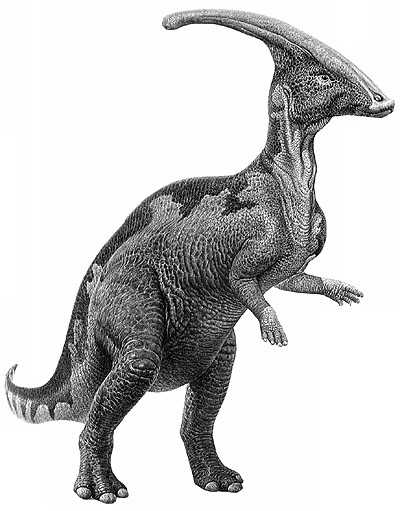
Well, why not? I like dinosaurs. I bought them with the vague idea of putting them on my desk at work. Then I realized that my desk is already occupied by a firefighting helicopter, a large rubber Parasaurolophus, and a small yellow plastic frog which Miss H and I won at a Californian arcade.

So now they're on the windowsill in my apartment, and I must say, they do spruce the place up a bit. Every living room could use some of the old Mesozoic charm.

That's what I think, anyway.

Friday, July 8, 2011

the porcelain gods

It's Thursday, a long week is nearly done, too many long weeks preceded it, and I'm feeling quite brisk for having consumed three beers, a piña colada and a bottle of hard cider last night. So I'm in the mood for a lighthearted, cheery, goofy sort of post today. And if it involves John Barleycorn, so much the better.

Step up, step up, it's time for Theology of Alcohol 101.

There are two cultural benchmarks you can always count on finding amongst any group of humans, from the most technologically advanced city to the most primitive tribe. Small or large, urban or pastoral, superstitious or pragmatic, violent or peaceful, black or white: whoever they are, they'll have invented two things, right from the get-go.

...religion and booze.

They're universal. It's impossible to have any kind of organized society without them. Any culture, no matter where it stands on the spectrum of cultural achievement, will unfailingly possess a way of explaining the world they live in, and a way of coping with said explanation.

...religion and booze, respectively.

Moreover, each of these separate cultural institutions supports the other with near-perfect synergy. Booze provides a welcome escape from the constant worry involved in toeing the line between vengeful gods and bloodthirsty demons, and the maddening dichotomy of good and evil. Religion is fueled by the battle against temptation, overindulgence and immodesty. The preachers preach, the lushes drink, and everyone stays happy. God claps His hands and Satan sharpens his knives.

But far from justifying each other's existence, religion and booze have gone as far as to cross the demarcation line and merge as one. Booze has become so integral to some cultures that it has elevated itself to divine status. Many of the world's peoples possess, or once possessed, a "drink of the gods" or "divine liquor" available only priests or chieftains, and which was used only during the most holy of liturgical practices. Thereby the drinking of liquors became not only sanctified, but sacred.

Some cultures took this even farther and worshiped a god or goddess devoted solely to the creation, promulgation and enjoyment of liquor.

W.C. Fields, eat your heart out.

I've listed a few of these deities here in this post. For your consideration...

DIONYSUS & SILENUS (Greece)

Probably the most well-known pair in the Boozer Pantheon. Dionysus was widely acknowledged in Ancient Greece as the god of the grape harvest, wine, wine-making, and (some accounts have it) "ritual madness and ecstasy." (Indeed, a number of old carvings have him and his followers engaging in drunken orgies.)

If wine and craziness seem like trivial things for a god to watch over, think again. Wine was so important to the Ancient Greeks that Dionysus is often listed as one of the Twelve Gods of Mount Olympus, who were basically in charge of the entire universe.

The Greeks liked their booze.

Dionysus was the most well-traveled god after Hermes. After growing up amongst the rain-nymphs of Mount Nysa, Dionysus discovered the science of wine-making, but Hera struck him with madness and forced him to wander the world. Dionysus knocked around for a bit until he bumped into Rhea (Zeus's mother), who cured him. Then Dionysus went gallivanting all over Asia teaching people how to make wine. He brought these teachings with him upon his triumphant return to Greece. Most people embraced them and worshiped Dionysus as a god. Some princes opposed him, however, and the "madness and ecstasy" that wine brought upon humanity. Today we call it such madness "drunkenness," ecstasy "drunk sex," and people like the princes "temperance societies."

His sidekick, tutor, mentor and drinking buddy was a fellow named Silenus. There are conflicting stories about his appearance. Some sources describe him as a demigod with the ears and tail (and in some cases, legs) of a horse; some say he was a full-blown satyr. Some say he was just a man, or perhaps a minor deity, a foster father to Dionysus who tutored him in the ways of wine. All the reports agree on one thing, however: Silenus was a roaring, red-faced, falling-down, grass-eating drunk. He was always blitzed. In fact, he needed hooch like most people need food, water, or air: none of his godly powers would work when he wasn't off his gourd. Only when intoxicated, it was said, did Silenus possess the powers of prophecy and divination. Routinely, he would get so schnockered that he couldn't even walk. He had to be carried by his satyr subalterns, or thrown onto the back of a donkey. C.S. Lewis's representation of Silenus in The Chronicles of Narnia has him doing just that, sitting on the back of a donkey in Pan's cavalcade, ceaselessly calling for "Refreshments! Time for refreshments!"

Now if he don't qualify to be the god of drunks, I don't know who would. There's a god I could get behind, folks. At least he had fun and didn't worry about all that existential crap.

MAYAHUEL (Mexico)

She's the most versatile goddess you never heard of. Mayahuel was the goddess of maguey among several Mesoamerican cultures in Central Mexico during the Postclassic pre-Columbian era.

What's maguey, you ask?

It's a plant. Agave, as luck would have it. Agave americana, also known as American aloe. Today it's cultivated worldwide as an ornament for window or table, but it's more than just a pretty plant. Today it's used to make agave syrup, a sugar substitute with a low glycemic index (which I've used many times in my cocktails, to great effect).

The Mesoamericans, the Aztecs among them, cultivated maguey for its fibers (which were useful in embroidering cloth) and to (what else?) make booze.

By cutting the stems of the maguey plant and fermenting the liquid that oozed out (called agua miel, or "honey water"), the Mesoamericans created a drink called pulque, a thick, milky beverage vital to the heritage and history of Mexico. Though today it's been outclassed by beer, pulque is still consumed by all sorts of people. Back in pre-Columbian times, however, pulque was so sacred that it could only be drunk by special, privileged folk, and was only used in ceremonial rituals.

So where does Mayahuel fit into this?

Well, she's the goddess of the maguey plant. Pulque is thought to be her blood. Just in case you thought Mayahuel might be a hot Latina whom you'd love to get drunk with, hold your horses. As the personification of the plant and all that it represents (nourishment, drunkenness, and fertility) Mayahuel therefore had dozens of breasts with which to suckle her children, the Centzon Totochtin (400 Rabbits). 

That's right, I said rabbits. Four hundred of 'em. You know how rabbits breed. And Mayahuel is a fertility goddess. Rabbits must represent mischief in Mesoamerican culture, too, because the Centzon Tonochtin were thought to be the bringers of drunkenness. Some people see pink elephants when they get smashed; if you were an Aztec weaving your way home from the bloodletting and you saw a rabbit in the street, you'd know who was responsible. And who to thank for your hangover in the morning.

ÆGIR (Scandinavia)

His name means "sea" in the Old Norse language. He was a sea giant, the god of the ocean in Norse mythology, and king of the sea beasts (including the ferocious Kraken).

He also hosted the best parties. Seriously.

Like most sea-gods, he was feared by all, particularly sailors. Norsemen believed that Ægir occasionally rose up from the depths to take ships, sailors and their cargo down to replenish his halls on the bottom of the ocean. Sacrifices were made to appease him before voyages (and when I say "sacrifices" I mean that prisoners-of-war were tied up and thrown overboard).

He's also the god most associated with booze in the Norse pantheon, because one of the other things he was known for was throwing the craziest parties this side of Valhalla. The man was an immaculate host and was always cooking up lavish galas for his fellow Æsir. On top of this, he was a home-brewer. The old engravings show Ægir and his nine daughters brewing ale in a pot the size of an Abrams tank. (Well, I take that back: they show his daughters making the beer, buck naked, while Ægir just sits around in a toga and looks contemplative. The old pervert.)

Ægir's origins are unclear, as is his demise, but it can be presumed that he and his wife Ran (the rain goddess) died in the apocalyptic war known as Ragnarök. At least we can be sure that he had a few drinks in him when he kicked.

OSIRIS (Egypt)

Osiris has a...complicated history. He's the Egyptian god of the underworld, and how he got the job is an epic in itself.

It seems Osiris had a jealous brother named Set who murdered him, stuffed him into a chest, and threw him into the River Nile. The chest drifted downriver for some days, washed ashore and (somehow) got lodged in a tree trunk. Isis, Osiris's wife (and the goddess of the sky) found the chest and retrieved the body. Accounts vary, but some say that Isis used a secret spell to bring Osiris back to life so he could impregnate her. (The Egyptians were okay with necrophilia as long as it produced results, I guess.) Then Osiris died again. Set, the persistent cuss, located Osiris's body and chopped it up into pieces. He scattered these nasty bits all around Egypt. Iris, bless her, wouldn't stand for it. She and her sister Nephthys found the pieces and stuck 'em back together. The gods were so impressed by the women's devotion that they resurrected Osiris. But they could only resurrect his spirit, which could not remain in the land of the living, so they sent Osiris down to be god of the underworld. 

Isis later gave birth to Horus, the falcon-headed god of the sky, warfare, and divine protection. (Seems like the only negative side-effect of necrophilia is that your offspring might have animal parts.)

The Egyptians invented zombies before the Haitians institutionalized them. In the ancient carvings, Osiris is invariably depicted as a green-skinned, partially mummified man with a pharaoh's beard and the symbolic crook and flail in his hands. Osiris, Isis and Horus became great and noble gods, loved by Egyptians. Set was eventually demonized, going from the god of deserts, storms and foreigners to the god of evil and chaos. He was given the head of some strange animal with a curved snout, angular ears, a forked tail, and a big mouth. Years later Robert E. Howard would cast Set as the driving force behind many evil sorcerers and dastardly plots in his Conan mythos, making him an inhuman monster of a god, associated with snakes, worshiped with sick, gory rituals by depraved and bestial humans in temples with unspeakable names.

Osiris became a (merciful) judge of the dead, and was also responsible for all that went on underneath the Earth, including ground water, the flooding of the Nile, and growing crops. Among those crops was barley, which was used to make beer.

Beer was fundamental to Egyptian society, even more so than it was for the Aztecs and other Mesoamerican cultures. It was used as currency. The workers who built the pyramids at Giza were paid two jugs of beer a day. Critics have considered this to be a most base tactic: get your slaves hooked on a controlled substance (which simultaneously nourishes them and puts them to sleep at night) and you can control their actions, prevent uprisings, etc. From what I heard, the pyramids were built voluntarily, people. The Egyptians deified their rulers, so anybody who built a pyramid felt honored to be involved in the construction of a god's final resting-place.

NINKASI (Sumeria)

The fact that Ninkasi is the only key player in Sumerian mythology to have her name given to a brewery (in Eugene, Oregon) should tell you something right off the bat. Defined by Wikipedia as "the Sumerian matron goddess of the intoxicating beverage" (i.e., beer; they didn't exactly have any Chablis back then), Ninkasi was depicted as a die-hard home brewer and a rather important personage. She was one of the eight deities born to Enki, the god of crafts. Each of those eight deities represented a part of the human body; Ninkasi, unsurprisingly, represented the mouth.

She, and the beverage she brewed daily, were great friends to the little guy. Ninkasi and her sudsy creation sated the hearts and soothed the souls of humankind. You could always count on her to sling you a brew and help you forget about your hard day. And in Ancient Sumeria, there were plenty of hard days; the task of inventing writing, agriculture, religion, and art and thereby kick-starting civilization as we know it weighed heavy upon the average Sumerian's shoulders.

MBABA MWANA WARESA (Southern Africa)

Somehow it seems like most gods in pantheistic religions must always do double-duty. Mbaba Mwana Waresa (hereafter referred to as Mbaba) was the Zulu goddess of fertility. "Fertility" in the old days meant a lot of things: not just sex and childbearing, but also farming, weather, crops, harvests, and whatnot. Mbaba governed rainbows, rain, agriculture, and...beer. Without her, rain did not fall, crops did not grow, beer did not get brewed, and (coincidentally) kids did not get born. She was very important in Zulu culture, and probably had some mighty good festivals thrown in her honor during both planting and harvesting seasons.

The link the Zulus made between crops, beer, and childbirth is intriguing, to say the least. Do you suppose that the tribesmen of South Africa discovered the concept of beer goggles thousands of years before Europeans did...?

RADEGAST (Czechoslovakia)

Early writings name him as a god worshipped by the Lutician culture, but his influence grew until he came to be considered the Slavic god of hospitality.

And what's an essential part of any kind of hospitality?

Booze.

Indispensably, booze.

You offer your guests a drink when they come in the door. You serve wine with dinner. You have a beer around the barbecue with the guys. You get crazy tropical cocktails with corny names when you're at the beach. You even offer your enemies a martini (shaken, not stirred). In business terms, "hospitality" means restaurants, hotels and bars, all of which serve liquor. Unless you're a health nut, a teetotaler or a Mormon, someone's going to offer your an alcoholic beverage by way of welcome or thanks.

That's where Radegast comes in. His name can be liberally translated to mean "Dear Guest." He became emblematic of the rural European idea of hospitality: you usher your visitors in out of the cold, plonk 'em down by the fire, start cooking dinner, and (in the meantime), shove a beer in their direction.

"Radegast" is now a brand of Czech-made beer, in fact.

For being the god of hospitality and having the coolest effing name on this list, Radegast scores way up there on the booze-god spectrum.

RAUGUPATIS & RAGUTIENE (Lithuania)

Not quite as universal as Radegast but still Slavic in origin are this husband-and-wife pair from Eastern Europe. They weren't major gods in the pantheon, but they were still divine. Raugupatis (sometimes simply Ragutis) and Ragutiene are, simply put, the god and goddess of beer. Ragutis, bless his heart, is sometimes named as the god of beer, vodka, and mead, all in one. If that doesn't make him a straight-up, hands-down booze god, I don't know what does.

I don't really know how important R & R really were, however. The Lithuanians, it seems, had gods and goddess for everything back in their pagan days. Austheja was the goddess of bees; Sznejbrato was the god of birds and hunting; Polengabia was the goddess of fireplaces; Usparinia watched over land borders; and so on, and so on. The Lithuanians are the only culture I know who retained both a god of war and a god of thunder (both of whom were still only minor deities, mind you). They even had one goddess, Budintoja, who was responsible for waking up sleeping people. The Lithuanians must've taken a flipping age and a half to say grace before dinner.

Raugupatis and Ragutiene get sort of lost in the shuffle. Nonetheless I'll bet many a bearded Lithuanian raised a mug to them as he took his first draught after a hard day of doing whatever the hell Lithuanians do.

INARI (Japan)

This person has the same nebulous connection to hooch that Osiris does. Inari was a Shinto kami ("kami" being Japanese for "god/deity/spirit"). Somewhat androgynous, he/she/it has been represented as male/female/hermaphroditic, depending on who you talk to. He/she/it may even be a combination of four or five kami who were in charge of similar stuff. Inari was in charge of fertility, rice, agriculture, foxes, industry, and worldly success.

What is it with booze gods having really strange animals in their entourage? First Mayahuel and her four hundred rabbits, and now Inari and foxes.

Now, hold on a moment. Let me explain something here. Foxes (kitsune in Japanese) are special beings in Shinto. They are intelligent creatures, clever, able to assume human form, renowned for their trickery and cunning, which manifests itself in everything from harmless pranks to downright evil. Most often, though, they are portrayed as faithful guardians, friends, lovers, and wives. Having one on your side can bring you good luck, which explains their inclusion on a list like the one above. Industry and a good kitsune can bring you worldly success.

And rice, as you'll remember, is the main ingredient in brewing saké. So, indirectly, Inari became a poster boy for the Shinto take on alcohol and its trammels. If you overindulge on the rice wine, some of Inari's foxy servants might come to you and play some jokes on you.

Inari is very popular in Japan and his/her/its shrines can be found all over the place. Offerings of rice and saké are left on the altars to appease the kitsune who might be waiting to jump unsuspecting pilgrims.

And now, I shall leave you with a joke. One of Martin Luther's friends stopped him in the street and asked him if he wanted to go have a few beers. Luther said "No thanks, I'm on the Diet of Worms."

You might want to click here.